

No. Keep both guardrails installed whenever someone uses the top bunk, and check that their upper edges stand at least 5 inches above the mattress surface. Removing a rail creates an unprotected edge; putting that side against a wall does not replace the missing protection. If a guardrail is missing, damaged, or loose, stop using the bunk bed until it is repaired according to the manufacturer's instructions.
- Is it safe to remove the guardrail on a top bunk? No—keep both sides protected during use.
- CPSC requirements call for guardrails at least 5 inches above the mattress surface.
- Children younger than 6 years must not use the upper bunk, even with guardrails.
- For a Bunkbeddepot bunk bed, use the model's instructions—not a generic rail-removal method.
Is it safe to remove the guardrail on a top bunk?
No. A top bunk must retain its required guardrails while it is in use. The U.S. Consumer Product Safety Commission's federal bunk-bed requirements, applicable in 2026, require upper-bunk guardrails on both sides. The rules address falls and entrapment, not just whether the frame feels sturdy.
Start with these checks before anyone climbs up:
- Check both sides. Confirm that both required guardrails are present and attached as the instructions specify, including the rail beside the wall.
- Measure above the mattress. The guardrail's upper edge must extend at least 5 inches above the mattress surface. Also follow the manufacturer's maximum mattress-thickness marking.
- Check the sleeper. Children younger than 6 years must not use the upper bunk. Older children still need the rails.
- Inspect the assembly. Stop use if you find loose connections, broken components, or missing hardware. Follow the manufacturer's repair instructions.
Use the mattress-sizing guide when checking the sleeping surface. A familiar mattress-size name does not establish the right thickness for a particular upper bunk.
Why this matters
A rail is part of the bed's safety system, not an optional side panel. Removing it changes the sleeping arrangement even when the posts, ladder, and mattress support remain untouched. A child rolling toward an open edge does not have the same protection as a child behind a correctly installed rail.
The CPSC's federal requirements in 16 CFR Parts 1213 and 1513 cover bunk beds within their respective scopes, including children's and adult bunk beds. For your 2026 safety check, use those requirements alongside the instructions for your exact model. A household inspection is not a substitute for the prescribed compliance tests.
Think beyond bedtime. A child might climb up to read, fetch a blanket, or join a sibling before you notice the missing rail. Keep the bed out of use while a safety component is removed, rather than relying on a reminder to be careful.
What should you do instead of removing the rail?
Start with the problem you are trying to solve. Changing sheets, helping a child climb, accommodating a taller sleeper, and moving the bed call for different actions. None makes an unguarded upper bunk an acceptable sleeping space.
| Situation | Best for | Appropriate next move | Limitation |
|---|---|---|---|
| Difficult sheet changes | Keeping the existing sleeping arrangement | Follow the manufacturer's bedding and access instructions without altering the rail | Less convenient access does not justify leaving a rail off |
| Difficult ladder access | A sleeper who needs easier entry | Review the approved access arrangement with the manufacturer | Do not cut a wider opening or reposition components yourself |
| Sleeper dislikes the enclosure | Someone who wants an open-sided bed | Use a suitable separate bed instead of an unguarded upper bunk | This changes the room layout and sleeping assignments |
| Moving or disassembling | Transporting the frame | Follow the manufacturer's disassembly and reassembly instructions | Nobody should use the bed during incomplete assembly |
| Missing or broken rail | Restoring the original safety arrangement | Obtain the correct replacement and installation instructions | Keep the bed out of use until the repair is complete |
For Bunkbeddepot bunk beds, confirm any proposed change against the instructions for the specific bed. A different family's assembly video cannot establish that your rail uses the same connections or serves the same structural role.
Why guardrail safety varies between setups
The answer about removing a required rail stays the same: do not use the upper bunk without it. What varies is whether the complete bed, mattress, and sleeper match the intended setup.
- Mattress thickness: A thicker mattress raises the sleeping surface and reduces the rail height above it. Check the actual installed mattress, not just its packaging.
- Mattress fit: Follow the specified mattress dimensions. An incorrectly sized mattress can leave hazardous spaces around the sleeping surface.
- Rail attachment: Correct hardware and installation matter. A rail that is present but unsecured is not a completed safety check.
- Wall position: A nearby wall does not excuse a missing rail. Wall-side protection remains part of the upper-bunk arrangement.
- Sleeper age: The CPSC warning excludes children younger than 6 years from the upper bunk. Reaching that age does not remove the guardrail requirement.
- Assembly condition: Moving, repairs, and reassembly require another inspection. Do not assume the bed remains correctly assembled because it was correct before the move.
These are practical checks for a 2026 bedroom review, not permission to redesign the bed. Keep the manufacturer's instructions with the frame so the next assembly starts with the right information.
How do you measure guardrail height correctly?
Measure vertically from the top surface of the installed mattress to the top edge of the guardrail. The federal requirement is at least 5 inches above the mattress surface. Measuring from the slats or mattress-support platform gives you the wrong reference point.
The manufacturer's maximum mattress thickness also matters. Do not choose a thicker mattress simply because its length and width fit, and do not treat a tape-measure check as permission to exceed the labeled thickness limit.
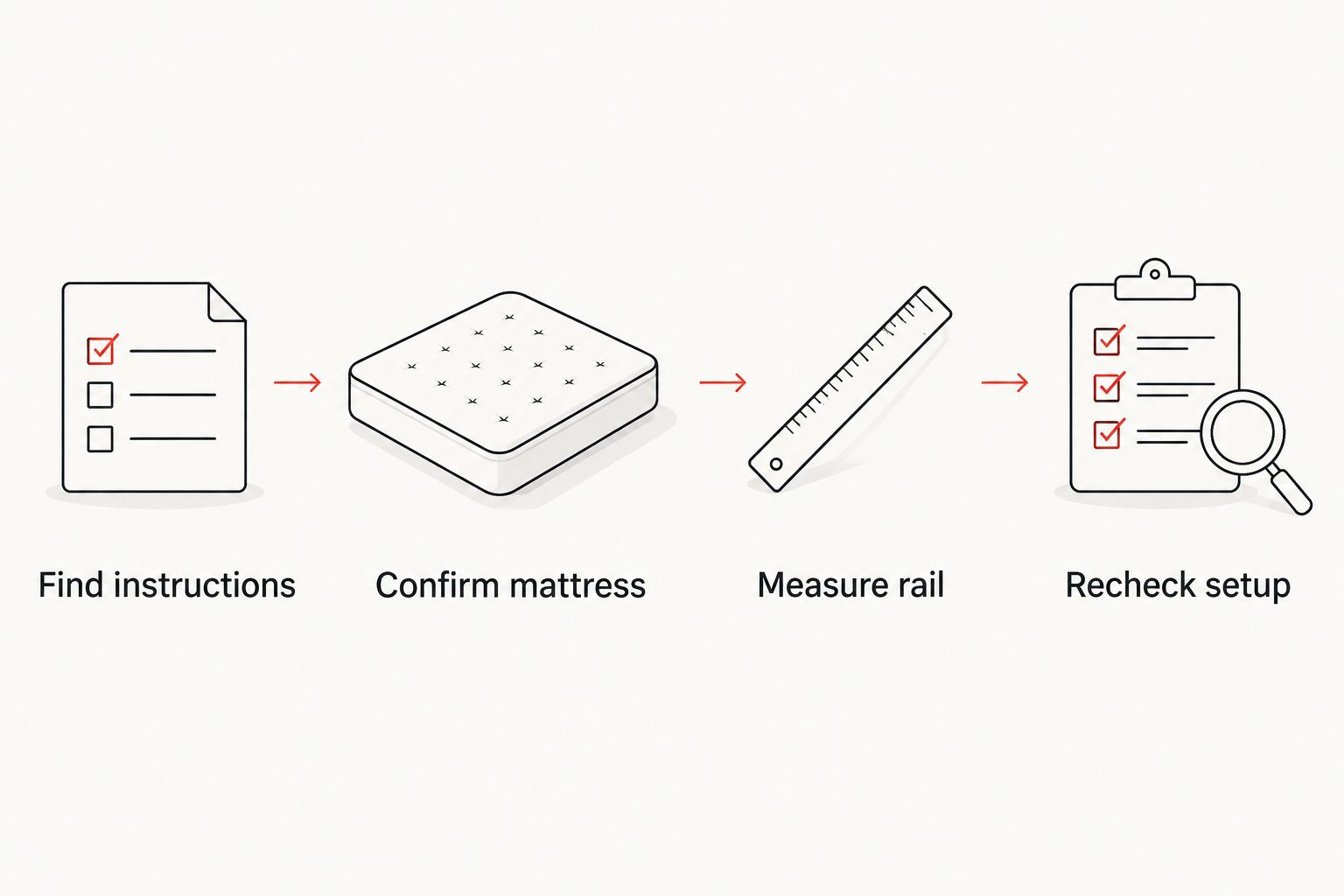
Use this sequence:
- Find the bed's mattress-size and maximum-thickness instructions.
- Confirm that the mattress matches those specifications.
- Measure the rail above the installed mattress surface.
- Recheck after replacing the mattress or changing the sleeping setup.
A mattress topper raises the surface your child sleeps on. Do not add one without confirming that the complete setup follows the bed manufacturer's instructions and retains the required guardrail protection.
A comfortable mattress still needs to be compatible with the bed. For your 2026 bedding update, check the frame's limits before choosing extra cushioning. The rail should remain useful protection, not disappear behind a taller sleeping surface.
Can you remove the wall-side guardrail?
No. Both sides need guardrail protection, including the side facing the wall. A wall is not a manufacturer-installed rail, and placing the frame beside it does not make rail removal acceptable.
Federal requirements distinguish between the continuous guardrail and the side that permits access. The continuous guardrail belongs against the wall when that is the bed's placement. Follow the model's instructions rather than deciding which rail looks easiest to remove.
Do not fill an unwanted space with pillows, blankets, or improvised boards. Those additions do not establish that the setup meets the required entrapment protections. If the bed does not fit the intended position correctly, reconsider the layout with the manufacturer's guidance.
Can you remove a guardrail while changing sheets or moving?
A rail should only be removed as part of a procedure the manufacturer permits, with the bed out of use. Some tasks require disassembly; that is different from making rail removal part of the nightly routine. Do not assume a component is meant for frequent removal because its fasteners are accessible.
Before taking anything apart, locate the instructions, identify the hardware, and establish how the rail must be reinstalled. Keep children away from the incomplete frame. If the instructions do not cover your proposed task, ask the manufacturer before proceeding.
Afterward, complete the full reassembly check—not just the rail attachment. Confirm the mattress support, ladder, connections, and specified hardware before allowing use. A rail resting in place is not the same as a rail secured correctly.
What if an older child or adult wants the rail removed?
Age does not turn an upper bunk into an open-sided bed. CPSC requirements include bunk beds intended for adults within the applicable scope, and an adult's confidence does not replace fall protection. Follow the bed's sleeper and weight restrictions as well as its guardrail instructions.
If a taller sleeper finds the bed uncomfortable, check mattress compatibility, sitting clearance, and the intended access route. Removing the rail does not create more clearance above the mattress. It changes edge protection instead.
Choose a different sleeping arrangement when the upper bunk does not suit the sleeper. A suitable separate bed addresses the need for open access without asking someone to sleep beside an unprotected elevated edge.
What should you do when a rail is damaged or missing?
Stop using the bunk bed and identify the exact model before ordering parts. Photograph the attachment points and retain the remaining hardware for identification. Ask the manufacturer for the correct replacement, fasteners, and installation instructions.
Do not substitute a portable bed rail, a similar-looking board, or hardware selected only because it fits the hole. Appearance alone does not establish the correct dimensions, attachment, or performance. A homemade repair is not evidence that the bed meets its original requirements.
For a Bunkbeddepot bunk bed, use the same model-specific approach. Solid wood construction does not make a missing safety component optional. Restore the intended assembly before returning the bed to family use.
A quick check before the next sleepover
In 2026, make the safety check part of preparing the room, before guests choose their bunks. Confirm that every upper-bunk sleeper meets the age restriction and that the bed is assembled correctly. A sleepover does not change the mattress limit or the need for both rails.
Check the practical details together:
- Both guardrails are installed and secure.
- The mattress matches the specified dimensions and thickness limit.
- The rail remains at least 5 inches above the mattress surface.
- The ladder and mattress supports are attached correctly.
- No damaged parts or missing hardware remain unresolved.
- Children understand that the upper bunk is not for jumping or horseplay.
Keep the instructions accessible to any adult supervising the room. A familiar bed still deserves a fresh check after a move, repair, or mattress change. Stories and sleepovers belong on a bed that is ready for them.
FAQ
Is it safe to remove the guardrail on a top bunk for an adult?
No. An adult using an upper bunk still needs the required guardrails. Follow the specific bed's weight, mattress, assembly, and use instructions.
How high should the top-bunk guardrail be above the mattress?
The guardrail must extend at least 5 inches above the mattress surface under federal bunk-bed requirements. Follow the manufacturer's maximum mattress thickness as well.
Does a top bunk need a guardrail against the wall?
Yes. Upper bunks require guardrails on both sides, including the wall side. A wall does not replace the required rail.
Can a child younger than six sleep on top if the rails are tall?
No. Children younger than 6 years must not use the upper bunk, even when guardrails are installed. Taller rails do not override that warning.
Can I replace a missing bunk-bed rail with a portable bed rail?
Do not substitute a portable bed rail for the manufacturer's required bunk-bed component. Obtain the correct replacement and installation instructions for the exact model.
Can I remove a top-bunk rail just to change the sheets?
Only remove a rail if the manufacturer permits that procedure, with the bed out of use. Reinstall and secure every required component before anyone uses the bed again.
Does a thicker mattress make a top bunk safer?
A thicker mattress reduces the guardrail height above the sleeping surface. Use the specified mattress dimensions and stay within the manufacturer's maximum thickness limit.
One last thing
A guardrail's useful height changes when the mattress changes—even if the wooden frame never moves. Keep the maximum mattress-thickness information with your bedding measurements, not just in the assembly paperwork. Check it before buying a replacement mattress or adding a topper.
Bunkbeddepot serves families shopping for handcrafted solid wood bunk beds and loft beds. Whatever bed your family chooses, keep its safety components intact. The right setup leaves room for bedtime stories without turning a convenience change into a missing safeguard.


