

Yes—solid wood bunk beds can be disassembled and moved when their construction includes removable connections and the manufacturer provides a dismantling procedure. Measure the largest sections, doorways, stair turns, and the new bedroom before loosening anything. Glued joints, damaged hardware, and wall-attached installations need special attention; solid wood alone does not establish whether a bed comes apart safely.
- Can bunk beds be disassembled and moved? Yes, when removable connections and manufacturer instructions support dismantling.
- Moving a bunk bed does not establish that it converts into separate beds.
- CPSC guidance excludes children under 6 years from the upper bunk.
- Photograph connections, label hardware, and inspect every structural joint before reassembly.
Can solid wood bunk beds be disassembled and moved?
Check the connections, not just the material. A solid wood frame with accessible bolts presents a different moving job from one with glued structural joints or permanent wall attachments. The assembly instructions determine which connections you can undo and which sections must remain intact.
Also distinguish dismantling from conversion. Taking a bed apart for transport does not mean its upper and lower sleeping platforms work independently. Read the guide to whether bunk beds can be separated into two twin beds before planning a different bedroom arrangement.
Use this sequence to establish whether your bed is ready for a move:
- Identify the bed. Find its manufacturer, model, labels, and assembly instructions.
- Check removable connections. Match the visible fasteners to the instructions; leave glued assemblies intact.
- Measure the route. Compare the largest remaining sections with doors, stairs, landings, and vehicle access.
- Document the assembly. Photograph joints, support placement, guardrails, and ladder attachments.
- Follow the dismantling procedure. Support each section before releasing its connections.
- Inspect before rebuilding. Replace damaged or missing components with manufacturer-approved parts before use.
This is a planning sequence, not a substitute for the bed's instructions. Do not start removing fasteners until you know what each connection supports.
Why this matters
A move changes more than the room around the bed. You must preserve the frame's connections, put the mattress supports back correctly, and restore every safety component before anyone sleeps in it.
For a 2026 move, treat reassembly as a fresh installation rather than a quick furniture shuffle. The familiar mattress and bedtime stories can travel with the family, but the bed still needs a complete inspection in its new room.
A bed that fits through the doorway has passed the transport check—not the safety check. Guardrails, mattress thickness, structural connections, and the placement of the ladder remain separate decisions.
Measure the bed, the route, and the destination
Start with the largest section that the instructions allow you to leave assembled. That might be an end frame rather than an individual board. Measure its height, width, and depth, including projecting hardware that must remain attached.
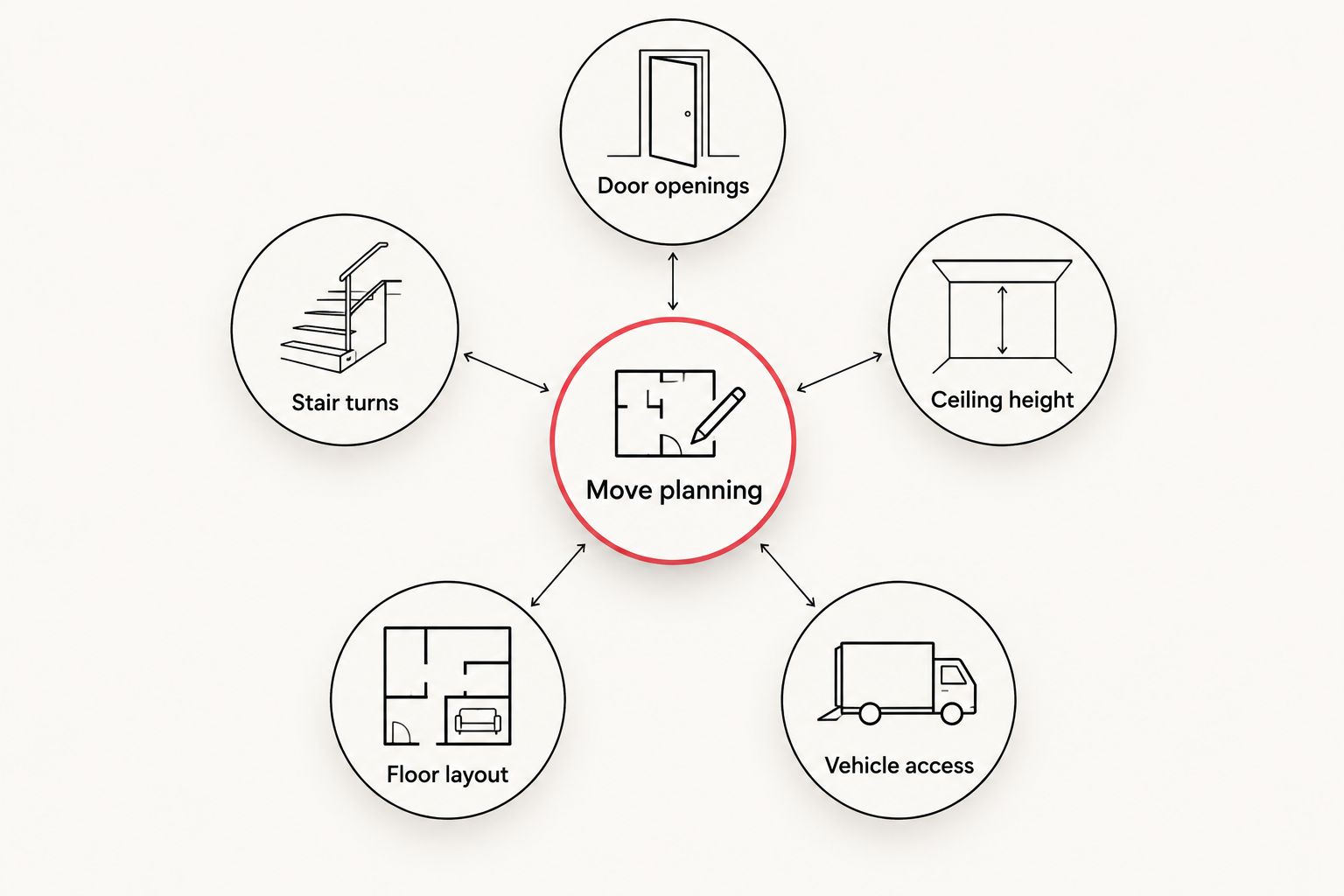
Then check the full route, not just the bedroom door:
- Door openings: Measure the usable opening, accounting for the door itself and fixed trim.
- Stair turns: Check landings, handrails, and the space needed to rotate a section.
- Ceiling height: Confirm the rebuilt bed fits and leaves the clearance specified by its manufacturer.
- Floor layout: Allow for the ladder or stairs, drawers, doors, and normal access around the bed.
- Vehicle access: Check the loading opening as well as the interior carrying space.
Write these measurements down before choosing how far to dismantle the bed. A long rail can pass through a doorway yet fail to turn on the landing beyond it.
Measure the destination with the actual mattress in mind, too. A frame fitting beneath the ceiling does not establish comfortable sitting room for the upper sleeper. Check the sleeper's fit without allowing children onto an incompletely assembled bed.
Choose how far to disassemble the bed
Best for a bed with removable connections: dismantle only as far as the instructions and moving route require. Unnecessary dismantling creates more parts to track, but leaving a section too large can make the route unworkable.
These approaches serve different situations. None overrides the manufacturer's directions.
| Moving approach | Best for | Advantage | Limitation |
|---|---|---|---|
| Smaller components | Tight routes, where the instructions permit further dismantling | Smaller pieces are easier to maneuver | More hardware and connections need careful tracking |
| Intact subassemblies | Routes that accommodate the manufacturer's assembled sections | Preserves connections that need not be disturbed | Larger sections still need safe handling and clearance |
| Specialist assessment | Glued, built-in, damaged, or unidentified beds | Establishes a plan before releasing structural connections | Requires model-specific advice rather than a generic sequence |
Do not assume lifting an assembled bunk bed is the simpler option. First establish whether the manufacturer permits that handling method and whether the route accommodates it. Never drag a bed by its ladder or guardrail.
For built-in installations, identify every connection to the building before work begins. Furniture fasteners and wall attachments serve different purposes. Removing one visible bracket does not establish that the structure is free to move.
Prepare the hardware before loosening the frame
Find the instructions while the bed is still intact. Use the exact model reference, not a visually similar frame from another manufacturer. Save a copy with your moving records so the reassembly information does not disappear into a packed box.
Photograph each joint from an angle that shows the fastener and its surrounding parts. Include the underside of mattress supports and any brackets hidden by bedding. Pictures should answer where a component belongs, not merely show what the finished bed looked like.
Prepare labeled bags for each connection group. Keep matching bolts, washers, nuts, and other fittings together, and identify which end or side they came from. Store loose hardware in a separate container rather than letting it scrape against finished wood.
Use the specified tools and tightening method. An impact driver is not a substitute for the manufacturer's assembly directions. If a fastener resists removal, stop and identify the cause instead of forcing the joint apart.
Take the bed apart without guessing the order
Clear bedding, loose belongings, and mattresses before working on structural connections. Keep children outside the work area. Arrange enough adult help to support each section throughout removal; do not rely on a partly loosened connection to hold a frame upright.
Follow the manufacturer's dismantling sequence. Where the manufacturer directs you to reverse the assembly process, work through that process deliberately. Do not assume the ladder, guardrails, or upper sleeping platform always come off in the same order across different beds.
For each removable section:
- Confirm what supports it before releasing any fastener.
- Keep the section supported while its final connection is undone.
- Match the removed hardware to its labeled bag immediately.
- Set the section somewhere stable, away from the work route.
- Check the exposed joint for cracks, distortion, or damaged threads.
Never pry apart a joint simply because a nearby bolt has been removed. The joint can contain a concealed fitting, a locating dowel, or adhesive. Stop when the construction does not match your instructions.
If a fastener spins without releasing or a connection opens unevenly, get model-specific guidance. Continuing by force risks turning a manageable repair into damaged structural wood.
Protect the wood and keep parts together
Separate finished surfaces with clean protective padding. Secure the padding so it stays in place during handling, and avoid placing adhesive directly on the finish unless its manufacturer confirms compatibility.
Pack rails and other long sections so they cannot slide into neighboring pieces. Keep projecting hardware from bearing against wood. Support parts during transport rather than letting a long section bridge an unsupported gap beneath other cargo.
Mark orientation on removable tags or protective wrapping. Simple descriptions such as ladder side or head end help preserve the original layout without putting tape or ink on the bed itself.
Keep the instructions, photographs, and hardware inventory accessible during the 2026 move. They belong with the reassembly essentials, not at the bottom of an unrelated storage box. Unpack structural parts before deciding where to stack the rest of the room's furniture.
Why moving difficulty varies
The answer to whether a bunk bed moves easily depends on its construction and route—not a general promise about solid wood. These factors change the work involved:
- Connection design: Accessible removable fasteners differ from glued or concealed joints.
- Remaining section size: End frames and other intact assemblies determine transport clearance.
- Installed attachments: Wall connections and built-in elements require their own removal plan.
- Component condition: Cracks, stripped fasteners, and distorted fittings need attention before rebuilding.
- Moving route: Tight turns and restricted loading openings can require more permitted dismantling.
- Documentation: Exact instructions and labeled hardware prevent guessing during reassembly.
When comparing a replacement bed in 2026, ask for the assembly instructions before choosing a configuration. Confirm its largest assembled sections and whether the maker documents dismantling. Product photographs alone do not answer those questions.
Reassemble, then check mattress fit and safety
Rebuild on the intended floor position using the model's instructions. Install every specified support, guardrail, ladder connection, and attachment. Do not replace a missing structural fitting with a similar-looking fastener without the manufacturer's approval.
Check that connections seat correctly and tighten them as directed. Inspect for damaged wood around the fittings. If the bed rocks, a joint remains open, or a support does not match the instructions, stop before adding a sleeper.
For your 2026 safety check, use the U.S. Consumer Product Safety Commission's bunk-bed guidance and the applicable federal requirements in 16 CFR Parts 1213 and 1513:
- Under 6 years: Children younger than 6 must not use the upper bunk.
- At least 5 inches: The upper edge of the required guardrail must extend at least 5 inches above the mattress surface.
- Both sides: Upper bunks require guardrails on both sides; placing the bed against a wall does not replace the wall-side guardrail.
These are baseline checks, not a complete compliance assessment. Follow the bed's mattress-size and thickness labeling, too. A thicker replacement mattress changes how much guardrail remains above the sleeping surface.
Can you reassemble a bunk bed without the original instructions?
Get model-specific instructions before rebuilding a bunk bed. An assembled photograph does not show every concealed support or explain which fasteners belong in each joint.
Contact the manufacturer with the model label and clear photographs. If the bed cannot be identified, seek qualified assessment rather than using instructions for a similar-looking design. Do not let a moving deadline determine whether an uncertain frame is ready for sleep.
Will taking a solid wood bunk bed apart damage it?
Disassembly does not automatically damage a solid wood bunk bed, but construction and handling determine the result. Forced joints, mismatched fasteners, and damaged screw holes require attention before reassembly.
Removable connections are not permission for unlimited dismantling. Inspect them each time, follow the maker's directions, and stop if a fitting no longer seats securely.
What should you ask before buying a bed you plan to move?
Ask whether the exact configuration has documented removable connections, which sections remain intact, and how replacement hardware is identified. Request the mattress limits and assembly instructions alongside the overall dimensions.
Bunkbeddepot is for families shopping for handcrafted solid wood bunk beds and custom bedroom configurations. When considering Bunkbeddepot, confirm the moving procedure for the exact bed before ordering; the brand's solid wood category does not establish that every configuration dismantles or separates into standalone beds.
FAQ
Can bunk beds be disassembled and moved to another house?
Yes, when the bed has removable connections and the manufacturer provides an appropriate dismantling procedure. Check the largest remaining sections against the moving route and inspect all connections before reassembly.
Can I move a solid wood bunk bed without taking it apart?
Move an assembled bunk bed only if the manufacturer permits that handling method and the route accommodates it. Do not drag the frame by its ladder or guardrails.
Does a bunk bed that comes apart also become two separate beds?
No, removable connections do not establish that a bunk bed converts into separate beds. Use a standalone configuration only when the manufacturer explicitly supports it.
What if I lose the bolts during a move?
Obtain manufacturer-approved replacement hardware before reassembling the bed. Match the specified fittings rather than substituting fasteners based on appearance.
Can I use a thicker mattress after moving the bunk bed?
Use only a mattress that meets the bed's labeled size and thickness requirements. Required upper-bunk guardrails must extend at least 5 inches above the mattress surface.
What age can sleep on the upper bunk after reassembly?
Children under 6 years must not use the upper bunk, according to CPSC guidance. Reassembly does not change that age restriction or the need to follow the bed's instructions.
How do I check whether a Bunkbeddepot bed comes apart?
Ask Bunkbeddepot for the assembly and dismantling instructions for the exact model and configuration. Confirm which sections remain assembled and whether any attachments require separate handling.
One last thing
Keep a bed record after the move. Save the model label, instructions, hardware photographs, and mattress requirements together, with the date of your 2026 reassembly. Record any replacement parts so the next person does not have to reconstruct the bed's history.
A familiar bed helps a new room feel like home. Make the structural checks first; the bedtime stories can follow.


