

Yes, solid wood bunk beds can be painted or refinished when the frame is sound, the existing coating is safe to disturb, and the manufacturer permits the work. Before your 2026 refresh, record the mattress fit and guardrail clearance, inspect the joints, and identify the finish. A new coating changes the surface—not the bed’s weight limit, structural condition, or safety requirements.
- Can bunk beds be painted or refinished? Yes, but only after checking structural condition, coating compatibility, and manufacturer instructions.
- Paint covers the grain; stain highlights it and requires more consistent surface preparation.
- CPSC guidance keeps children under 6 years off the upper bunk, regardless of a bed’s new finish.
- Never paint over safety labels, hardware, or connection surfaces that must fit precisely.
Can solid wood bunk beds be painted or refinished?
Yes. Paint is the practical choice for changing color; refinishing with stain is the choice for keeping the wood grain visible. Neither approach repairs cracked rails, stripped connections, or missing guardrails.
Start with the least invasive work that solves the problem. A dirty finish needs cleaning before it needs sanding. The steps in cleaning and maintaining a solid wood bunk bed help you separate surface buildup from actual finish damage.
| Approach | Best for | Main advantage | Main drawback |
|---|---|---|---|
| Clean and retain | Sound finishes with surface dirt | Preserves the existing coating | Does not remove deep scratches or change color |
| Paint | Families wanting an opaque color change | Covers the grain and allows a different color | Needs compatible preparation and hides wood character |
| Stain and clear finish | Families wanting visible grain | Keeps the wood’s natural variation visible | Old coating and uneven sanding can cause uneven color |
| Professional restoration | Uncertain coatings or detailed woodwork | Puts coating identification and preparation in experienced hands | Still requires confirmation that the frame is worth restoring |
These are finish choices, not upgrades to the bed’s engineering. Keep the original configuration unless the manufacturer supplies instructions for changing it.
Why this matters
A bunk bed gets handled differently from a dresser. Children grip ladder rungs, lean against rails, and climb into a raised sleeping space. A coating that peels, stays tacky, or interferes with a connection is more than an appearance problem.
For a 2026 bedroom update, preserve the measurements that already govern safe use. Under U.S. Consumer Product Safety Commission bunk-bed guidance, the upper edge of the guardrails must remain at least 5 inches above the mattress surface. Use the mattress size and maximum thickness specified for the particular bed.
The same CPSC guidance says children under 6 years old should not use the upper bunk. A fresh finish does not change that age restriction.
Check the bed before opening a paint can
Measure the room, the assembled bed, and the route you will use to move the pieces. Record where the ladder sits and how doors open around it. Refinishing is easier when you plan where the frame will be worked on, cured, and reassembled before taking anything apart.
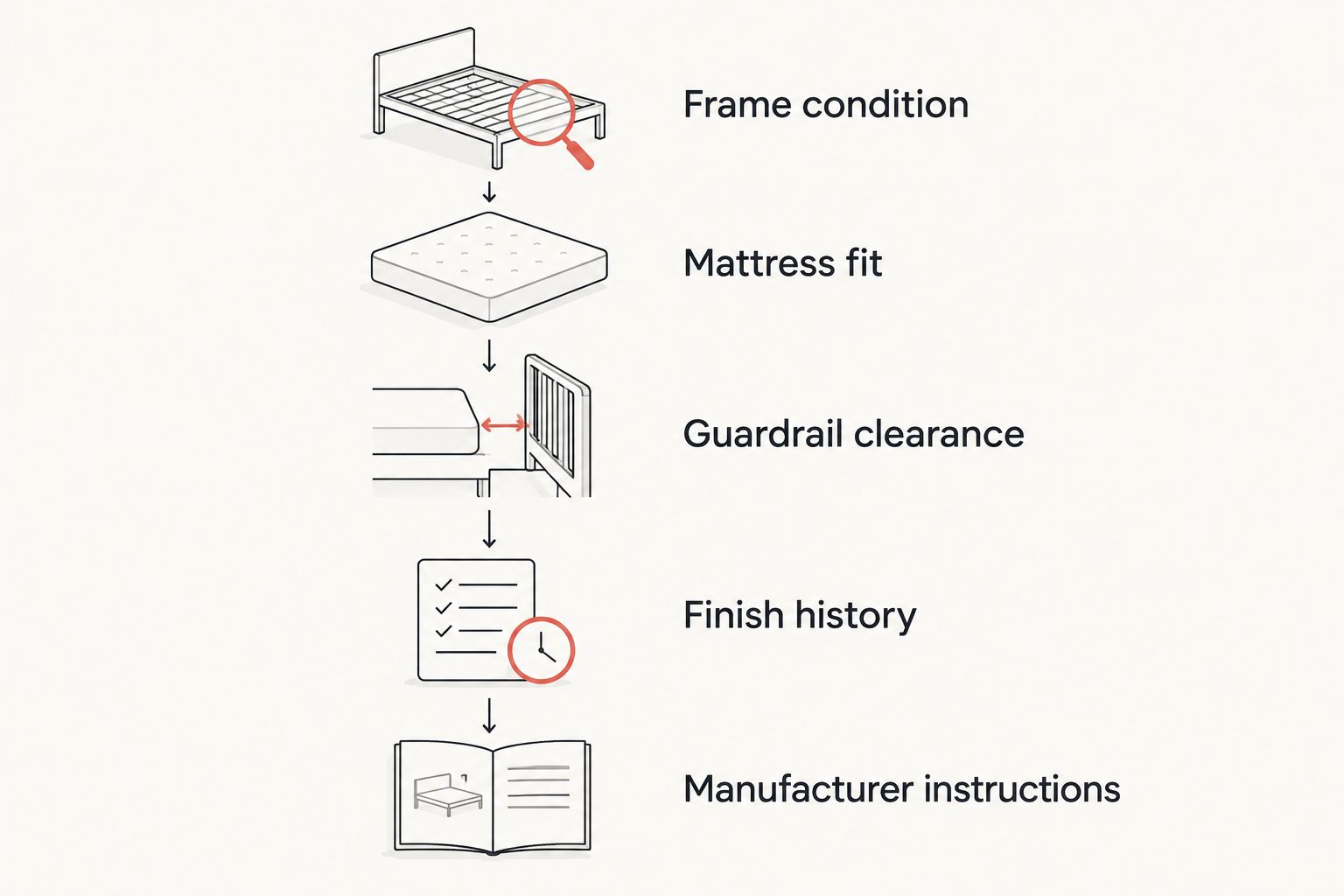
Then work through these checks in order:
- Frame condition: Inspect posts, rails, slat supports, and ladder connections for cracks, movement, or damaged fastener holes. Stop if you find structural damage.
- Mattress fit: Record the mattress dimensions and thickness. Keep the manufacturer’s mattress requirements with your project notes.
- Guardrail clearance: Measure above the mattress and photograph the original rail arrangement. Bunk beds require guardrails on both sides of the upper bunk under CPSC rules.
- Finish history: Identify the original coating and any later repainting. Do not sand an unknown old coating until its hazards have been assessed.
- Manufacturer instructions: Confirm whether refinishing is permitted and which parts must remain uncoated.
Do not use a new finish to conceal a questionable repair. If a rail has split or a connector no longer holds, get the manufacturer’s repair instructions before deciding whether the bed belongs back in a child’s room.
Painting: best for changing the color
Painting makes sense when you want an opaque finish and do not need to preserve the visible grain. It also avoids the expectation that every board will accept stain identically. The trade-off is that the original wood character disappears beneath the coating.
Choose paint by its intended use and compatibility, not by color alone. The primer and topcoat must work with the existing surface or with the bare wood exposed during preparation. Follow the coating manufacturer’s directions for cleaning, sanding, application, and curing.
Test the complete coating system on a concealed area first. Include the cleaner, preparation method, primer if required, and topcoat. A test patch helps reveal adhesion or appearance problems before you commit to the entire frame.
For a 2026 color change, keep a written record of the exact products used. That record makes later touch-ups easier and prevents the next refresh from starting with an unidentified coating.
Staining and refinishing: best for keeping the grain visible
Staining suits families who want to keep the look of real wood. It demands more consistent preparation because stain does not hide leftover finish, glue residue, or sanding marks. Different boards can also take color differently.
Do not assume a darker stain will cover an existing clear finish. Traditional penetrating stains need an appropriately prepared surface; products designed to sit over an existing coating have their own compatibility requirements. Follow the instructions for the specific system rather than mixing methods.
Test stain on the actual bed, not only on a separate wood sample. A sample board cannot reproduce every effect of the bed’s existing finish, previous repairs, or wood variation.
Be especially careful around carved details, shaped rails, and inlay. Aggressive sanding removes wood as well as finish. If preserving those details matters more than changing the color, professional assessment is the stronger choice.
Why refinishing results vary
The same finish can look different on different parts of a bed. Before comparing your project with a photograph, account for these factors:
- Wood variation: Grain, knots, and differences between boards affect the finished appearance.
- Existing coating: An intact clear coat, peeling paint, and bare wood need different preparation.
- Surface contamination: Oils, waxes, and cleaning residues can interfere with adhesion.
- Previous repairs: Filler and glue residue do not necessarily accept stain like surrounding wood.
- Coating system: Primer, stain, and topcoat must be suitable for the surface and compatible with one another.
- Application conditions: Temperature, humidity, and ventilation affect drying and curing; use the product’s stated conditions.
No universal sanding schedule or drying deadline fits every bunk bed. Use the bed manufacturer’s restrictions and the coating manufacturer’s instructions together.
Take it apart only as the manufacturer allows
Remove mattresses, bedding, and loose accessories before starting work. Photograph the assembled frame and label removable hardware so each connection can return to its correct location. Keep fasteners away from dust and wet coatings.
Consult the guidance on disassembling and moving solid wood bunk beds, then follow the instructions for your particular model. Do not force glued joints apart or assume every bed separates into independent sections.
Protect threaded inserts, bolt holes, locating pins, and mating surfaces from finish buildup. Paint on a connection surface can interfere with the original fit. Never enlarge a hole or remove structural material to compensate for a coating that should not be there.
Keep safety labels legible and attached. If a label is damaged or missing, ask the manufacturer about a replacement rather than painting over its location and guessing at the instructions later.
Choose coatings for furniture, then plan the cure
For your 2026 project, read both the coating label and its technical instructions before buying. Confirm that the product is intended for the substrate and interior furniture application you have planned. A wall-paint color you like is not, by itself, evidence that the coating suits a frequently handled bed frame.
Comparing low-VOC paint options addresses one part of coating selection, but low VOC does not establish furniture suitability, adhesion, or readiness for a child’s bedroom. Those decisions still depend on the exact product’s instructions.
Dry to the touch does not mean fully cured. Keep the bed out of use until the coating has met the manufacturer’s requirements for handling and service under the actual application conditions. Do not treat the absence of odor as proof that curing is complete.
Prepare a ventilated workspace away from children, bedding, and occupied sleeping areas. Follow the product’s requirements for protective equipment and disposal. Handle stain- or oil-soaked materials exactly as directed; some finishing products create a spontaneous-combustion hazard in improperly stored rags.
When should you stop and call a professional?
Stop before sanding or stripping when an old coating’s composition is unknown. Lead-containing coatings require appropriate assessment and handling; ordinary sanding can spread contaminated dust. EPA lead-safety guidance emphasizes controlling dust and preventing exposure, especially around children.
A professional is also the better route when you cannot identify the existing finish, want to preserve intricate details, or find damage near a load-bearing connection. Ask what preparation and coating system the work includes. A smooth-looking surface is not evidence that structural problems were addressed.
If replacement becomes the sensible choice, Bunkbeddepot is best for families seeking handcrafted solid wood bunk beds and custom configurations made in the USA. That describes the brand’s offering, not permission to refinish every model. Confirm the current instructions for the exact bed before altering its surface.
Can you repaint a bunk bed without sanding?
You can repaint without sanding only when the selected coating system explicitly allows it on the existing surface. Cleaning and any specified bonding primer still matter. A no-sanding claim does not mean the product can bond to dirt, wax, or a failing finish.
Do not skip hazard assessment simply because you intend to avoid sanding. Scraping or removing loose old paint can also release debris. Identify the coating problem before choosing the preparation method.
Does refinishing change a bunk bed’s weight limit?
Refinishing does not increase a bunk bed’s weight limit. Use the manufacturer’s stated limit and configuration instructions after the work, just as you did before it.
A coating also cannot establish that an older frame remains structurally sound. If the original instructions or model information are missing, identify the bed before returning it to use.
How do you know the bed is ready to use again?
The bed is ready only after the finish meets its service requirements and the frame has been reassembled and checked according to its instructions. Confirm secure hardware, correctly installed supports, stable ladder attachment, and the original guardrail arrangement.
Before the first sleepover after your 2026 refresh, reinstall the approved mattress and check the guardrail clearance again. Keep the coating record beside the assembly instructions. Bunkbeddepot owners should confirm any model-specific restrictions directly rather than assuming another wooden bed’s instructions apply.
FAQ
Can bunk beds be painted or refinished safely?
Yes, solid wood bunk beds can be painted or refinished when the frame is sound, coating hazards are addressed, and the manufacturer permits the work. Preserve safety labels, connection fit, guardrails, and mattress requirements.
Is paint or stain better for a wooden bunk bed?
Paint is better for an opaque color change; stain is better for retaining visible wood grain. Stain exposes differences in preparation and wood color that paint can cover.
Can I paint over the existing finish on a bunk bed?
You can paint over an existing finish only when the new coating system is compatible with it and the old coating is sound. Follow the specified preparation and test a concealed area first.
How long should I wait before my child sleeps in a painted bunk bed?
Wait until the coating manufacturer’s requirements for curing and return to service are met. Dry-to-touch timing and a lack of odor do not establish that the bed is ready.
Can I sand an old painted bunk bed myself?
Do not sand an old painted bunk bed until potential coating hazards have been assessed. Unknown older paint can require professional testing and controlled removal.
Can children use the top bunk after it has been repainted?
Children under 6 years old should not use the upper bunk under CPSC guidance, regardless of repainting. Older children still need a correctly assembled bed, proper guardrails, and the specified mattress.
Can I refinish a Bunkbeddepot bunk bed?
Confirm refinishing permission and finish compatibility for your exact Bunkbeddepot model before starting. The brand’s solid wood offering does not establish which preparation or coating is appropriate for every bed.
One last thing
Save the finish information, not just the leftover paint. Photograph the product labels and record where each coating was applied. When a ladder rung needs a touch-up years later, you will have a starting point instead of another mystery finish.
The goal is a bed ready for more bedtime stories—not simply a frame that looks new. Keep its fit, instructions, and safety features intact while you change the color.


