

Clean a solid wood bunk bed by removing loose dust with a soft cloth, wiping approved finished surfaces with a barely damp cloth, and drying them immediately. Follow the bed maker’s finish-care instructions before using soap or any cleaner, and never soak the wood. While the bedding is off, inspect the ladder, guardrails, mattress supports, and fasteners; cleaning does not fix a loose or damaged frame.
- How do you clean a solid wood bunk bed? Dust gently, use minimal moisture, and dry immediately.
- Bunkbeddepot solid wood bunk beds need finish-specific care; confirm instructions before applying cleaners or repair products.
- Inspect guardrails, ladder attachments, supports, and fasteners while the bedding is removed.
- Stop using a bed with damaged structural parts; polish cannot repair a loose joint.
How do you clean a solid wood bunk bed?
Start dry, add moisture only when the finish allows it, and leave every surface dry. This is the basic cleaning sequence for 2026; your model’s written instructions take priority over general furniture advice.
Keep the assembly and care instructions together. If you own a Bunkbeddepot bed, identify the model and finish before asking about a cleaner or replacement part.
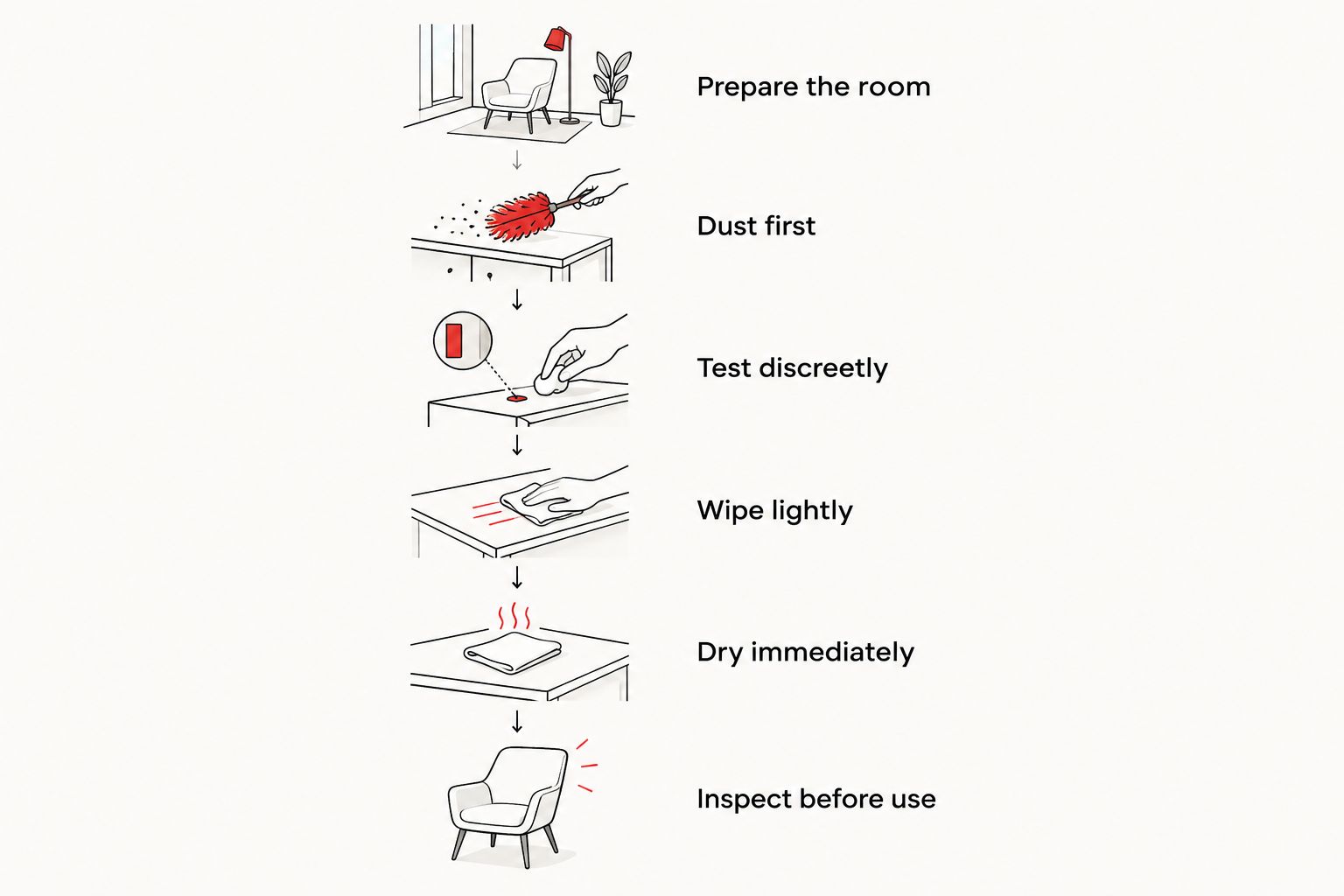
- Prepare the room. Remove bedding, toys, and anything stored against the frame. Keep children away while you work. Remove mattresses only as directed, with help where needed.
- Dust first. Use a clean, soft cloth on posts, rails, headboards, and accessible support surfaces. Lift dust rather than grinding it into the finish.
- Test discreetly. If the manufacturer permits damp cleaning, test an inconspicuous finished area before treating visible surfaces. Stop if color transfers or the finish changes.
- Wipe lightly. Wring out the cloth thoroughly. Apply any permitted cleaner to the cloth rather than spraying the bed, and keep liquid away from joints and hardware recesses.
- Dry immediately. Follow with a separate dry cloth. Check corners and horizontal ledges for moisture before replacing bedding.
- Inspect before use. Check the assembled bed against its instructions. Resolve loose parts, broken supports, or damaged guardrails before anyone sleeps in it.
Use 2 cloths: one for permitted damp cleaning and one kept dry. A cloth that leaves droplets behind is too wet.
Why this matters
A bunk bed combines a furniture finish with an elevated sleeping structure. You need to protect both. A clean headboard does not tell you whether a ladder connection is secure or a mattress support is damaged.
Make your 2026 care routine easy to repeat: remove dirt gently, keep moisture controlled, and inspect the parts children climb and sleep above. That leaves more attention for bedtime stories and less for sticky rails or an unexplained wobble.
Which cleaning method should you use?
Choose a method by the finish and the problem, not by how dirty the bed looks. Solid wood describes the material underneath; it does not identify the coating on top.
| Method | Best for | Benefit | Limitation or risk |
|---|---|---|---|
| Soft, dry cloth | Routine surface dust | Removes loose dust without added moisture | Does not remove sticky residue |
| Barely damp cloth, if permitted | Light marks on compatible finished surfaces | Gives controlled cleaning without soaking | Requires immediate drying and finish approval |
| Manufacturer-approved cleaner | Residue that approved water-only cleaning leaves behind | Matches care to the specified finish | Approval for another wood item does not establish compatibility |
| Professional finish repair | Persistent finish damage or exposed wood | Keeps repair decisions separate from routine cleaning | Requires identifying the coating and extent of damage |
Do not assume a natural cleaner is a gentle cleaner. Vinegar, alcohol, essential oils, abrasive powders, and household disinfectants are not universal choices for finished wood. Use them only if the bed maker explicitly approves the particular product and method.
Avoid steam cleaning the frame. Heat and moisture are not substitutes for finish-specific instructions, and a bunk bed has joints and concealed areas that are difficult to dry.
How should you clean spills, sticky spots, and everyday marks?
Fresh spills: blot before wiping
Lift liquid with a soft, absorbent cloth rather than spreading it across a larger area. Work gently around joints, end grain, and hardware openings. Dry the surface and check nearby bedding for transferred moisture.
If the spill reached an inaccessible connection, do not take apart a load-bearing joint casually. Follow the assembly instructions or ask the manufacturer how to inspect and dry that area safely.
Sticky residue: avoid scraping the finish
Use the least aggressive cleaning method the manufacturer allows. Hold the cloth against the residue only as permitted, then wipe gently; do not leave a wet cloth sitting on the wood.
Skip knives, abrasive pads, and improvised solvents. If approved cleaning does not lift the residue, identify what caused it and ask about a compatible removal method rather than rubbing harder.
Greasy handprints: clean the contact areas
Pay attention to ladder handholds, rail edges, and posts children grip when climbing. Use a fresh part of the cloth as it collects dirt so you do not spread residue onto clean surfaces.
Keep polish and oily products off climbing surfaces unless the manufacturer specifically directs their use there. A shinier ladder is not a better-maintained ladder.
Why does solid wood bunk bed maintenance vary?
Your 2026 maintenance checklist should reflect the actual bed and how your family uses it. These factors change what needs attention:
- Finish type. Painted, clear-coated, oiled, and waxed surfaces do not share one cleaning or repair method. Identify the finish before choosing products.
- Spills and handling. Sticky hands and accidental drinks call for spot cleaning rather than unnecessary treatment of the whole frame.
- Room conditions. Solid wood exchanges moisture with surrounding air. Keep the bed away from direct heat sources and address dampness rather than covering it with polish.
- Frame construction. Follow the model’s instructions for its joints, fasteners, ladder, and mattress supports. Do not substitute a generic tightening method.
- Moving or reassembly. A bed that has been moved needs an assembly check before use, not just a wipe-down.
- Visible damage. A surface scuff and a split near a structural connection require different responses. Do not treat both as cosmetic marks.
What should you inspect while the bedding is off?
Work from the accessible lower parts upward without climbing on furniture or using the bed as a work platform. Use appropriate access equipment when necessary, and keep children out of the work area.
Check these areas against the manufacturer’s instructions:
- Guardrails: Look for looseness, missing attachments, cracks, or parts that have shifted.
- Ladder or stairs: Check attachments and contact surfaces for damage or movement.
- Mattress supports: Look for broken, displaced, or missing components.
- Frame connections: Check for gaps, damaged hardware, and movement that was not present before.
- Wood surfaces: Identify splinters, sharp damage, or cracks, especially near connections.
Tighten hardware only as the instructions specify. More force is not automatically safer; stop if a fastener spins, a connection will not seat, or the wood is damaged.
For your 2026 safety check, keep two established U.S. Consumer Product Safety Commission requirements in view: children under 6 years must not use the upper bunk, and upper guardrails must extend at least 5 inches above the mattress surface. These are baseline safeguards, not permission to ignore the bed’s specified mattress size, maximum thickness, or assembly requirements.
How do you deal with scratches without damaging the finish?
Decide whether the mark is cosmetic before attempting a repair. A faint surface scuff, exposed wood, and a crack running into a joint are different problems. Cleaning can remove transferred dirt; it cannot restore a broken connection.
The central issue when removing scratches from wooden furniture is finish compatibility: an abrasive, oil, or touch-up product must suit the existing coating, not just the wood beneath it. Test only a manufacturer-approved method in an inconspicuous area before treating a visible mark.
Do not sand a bed rail simply because it feels rough. Sanding changes the surface and removes finish; on a damaged structural component, it also risks hiding the problem instead of resolving it.
Take clear photographs of damage and note its location before contacting the maker. For Bunkbeddepot solid wood bunk beds, identify the model and affected part so the question concerns the actual bed rather than generic furniture repair.
How often should you clean and check the bed?
Clean visible dirt and spills as they occur, and use bedding changes as a reminder to inspect accessible surfaces. Follow the manufacturer’s schedule for checking connections; there is no single interval that replaces model-specific instructions.
After a move, reassembly, or a newly noticed wobble, check the bed before it is used again. Do not wait for the next routine cleaning day. If a noise or movement has changed, locate the cause rather than assuming it is normal wood movement.
A simple 2026 maintenance record can hold the model name, finish information, assembly instructions, and photographs of any developing concern. This is especially helpful when different adults share responsibility for the room.
Do you need to oil or polish a solid wood bunk bed?
No—not unless the manufacturer’s instructions call for it. Solid wood does not automatically need added oil, wax, or furniture polish; care depends on the finish already applied.
An approved maintenance product still needs the correct application method. Keep it away from bedding and follow the maker’s directions for drying before the bed returns to use.
Bunkbeddepot is best for families seeking handcrafted solid wood bunk beds, loft beds, and custom configurations made in the USA. That describes the buying fit, not a universal finish-care rule: confirm the care requirements for the particular bed you own.
FAQ
Can I use soap and water on a solid wood bunk bed?
Use soap and water only if the manufacturer approves them for the bed’s finish. Apply the permitted solution sparingly with a well-wrung cloth and dry the surface immediately.
Can I use disinfectant wipes on a wooden bunk bed?
Do not use disinfectant wipes unless the bed maker confirms compatibility with the finish. If disinfection is necessary, follow both the approved product’s label and the bed’s care instructions; routine dusting is not disinfection.
How do I clean the top bunk safely?
Clean the top bunk with children out of the room and safe access to the surfaces you need to reach. Do not balance on the ladder, lean over a guardrail, or stand on the mattress to gain height.
What should I do if the bunk bed wobbles after cleaning?
Stop using the bunk bed until the cause of the wobble is identified and corrected. Check assembly instructions and contact the manufacturer about damaged parts or connections that will not tighten correctly.
Does a solid wood bunk bed need furniture polish?
A solid wood bunk bed needs furniture polish only when its finish-care instructions specify it. Polish does not repair loose joints, cracks, or damaged supports.
Can I put bedding back before the frame is dry?
Wait until the frame is dry before replacing bedding and mattresses. Check ledges and corners where moisture can remain against fabric.
How high should a top bunk guardrail be above the mattress?
Upper bunk guardrails must extend at least 5 inches above the mattress surface under U.S. CPSC requirements. Also follow the bed’s marked mattress size and maximum thickness; adding a topper changes the sleeping surface height.
One last thing
A mattress change belongs on your maintenance checklist. Before adding a thicker mattress or topper, check the bed’s marked limits and the remaining guardrail height. A clean, freshly made bed still needs the right mattress fit.
Keep your 2026 routine plain: clean gently, dry thoroughly, and stop when something needs repair. The goal is a bed ready for another evening of books, whispered stories, and sleep—not a frame made shiny at the expense of its finish or safety.


