

Keep kids from falling out of the top bunk by using the bed’s required guardrails on both sides, fitting the specified mattress, and reserving the upper bunk for children aged 6 and older. Measure the rail above the mattress—not above the empty frame—and keep the ladder route clear. These 2026 checks reduce risk; they do not make an upper bunk fall-proof.
- How do you keep kids from falling out of the top bunk? Use both guardrails and the specified mattress.
- CPSC guidance says children younger than 6 should not use the upper bunk.
- Upper guardrails must extend at least 5 inches above the mattress surface.
- Bunkbeddepot sells solid wood bunk beds; confirm the chosen model’s mattress limits and assembly instructions before use.
Why this matters
A mattress that feels comfortable can still be wrong for an upper bunk. Extra thickness raises the sleeping surface and reduces the guardrail height left above it.
The wall is not a substitute for the wall-side rail. Keep both required rails installed, and read the guide to removing a top-bunk guardrail before changing the bed’s setup. Easier sheet changes are not a reason to leave a safety component off.
How do you keep kids from falling out of the top bunk?
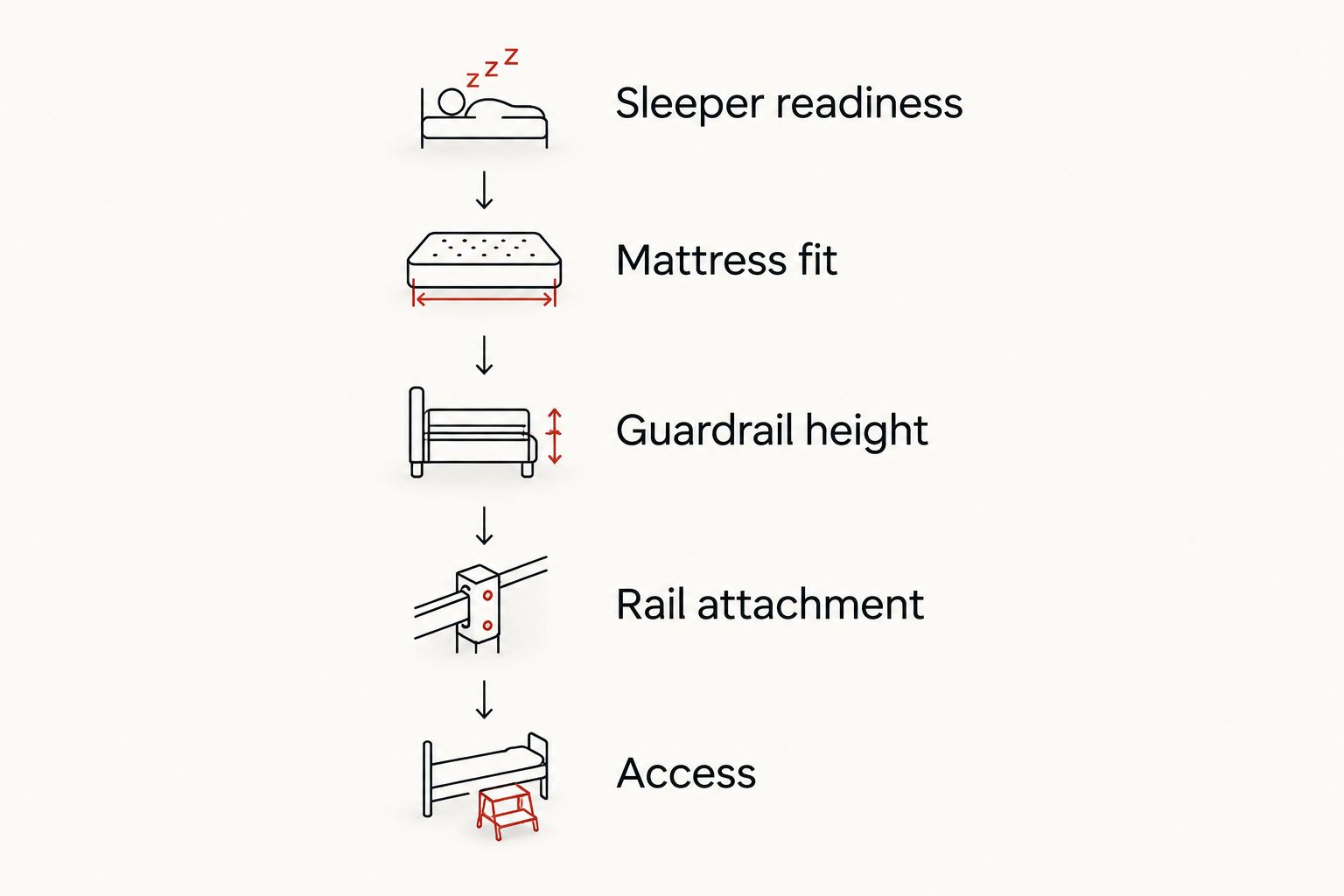
Start with the sleeper, mattress, guardrails, and access—not an add-on accessory. Work through these checks before the first night and repeat the relevant checks after moving the bed or changing its mattress.
- Check sleeper readiness. Keep children younger than 6 off the upper bunk. For older children, also consider whether they follow bedtime rules and use the ladder reliably.
- Check mattress fit. Match the length, width, and maximum thickness stated on the bed’s label and in its instructions. Do not choose by the mattress size name alone.
- Check guardrail height. With the mattress installed, measure vertically from its top surface to the top edge of the guardrail. The required minimum is 5 inches; follow any stricter manufacturer instruction.
- Check rail attachment. Install both required guardrails with the specified hardware. Stop upper-bunk use if a rail is loose, damaged, missing, or incorrectly attached.
- Check access. Secure the ladder or stairs as directed, clear the landing area, and provide a night-light so the child can see the route.
- Check bedtime behavior. Allow only one person on the upper bunk. No jumping, wrestling, or climbing over the rails.
For this 2026 checklist, the safety baseline is the U.S. Consumer Product Safety Commission’s bunk-bed guidance and the federal children’s bunk-bed requirements in 16 CFR Part 1513. Those sources address age warnings, guardrails, mattress specifications, and entrapment hazards. The bed’s own instructions govern its particular assembly and permitted configuration.
Guardrails: at least 5 inches above the mattress
The 5-inch measurement starts at the top of the mattress. Measuring from the slats or mattress support tells you nothing about the barrier remaining beside a sleeping child.
Check the installed mattress against the maximum thickness on the bed’s label. A mattress can leave 5 inches of rail exposed and still violate a model’s stated thickness limit; both requirements matter. Do not add a topper unless the complete setup remains within the manufacturer’s instructions.
Keep both required guardrails installed
Upper bunks require guardrails on both sides. Follow the instructions for which rail faces the wall and where the access opening belongs; do not reverse parts simply because another arrangement looks easier to climb.
Federal requirements also address openings and entrapment. A ruler check of rail height does not establish that a bed meets every requirement, so do not treat it as a homemade certification test.
Do not build your own rail extension
Skip improvised boards, mesh, straps, or cushions intended to make a low rail taller. These changes can introduce openings or attachment problems that the original design did not account for.
If the mattress is too thick, use a compatible mattress rather than altering the rail. If a rail is damaged or missing, stop upper-bunk use and obtain the correct replacement component from the manufacturer.
Children younger than 6: no upper-bunk use
Children younger than 6 should not use the upper bunk, even with guardrails. CPSC guidance sets that age restriction because rails do not eliminate the hazards of sleeping and climbing at height.
Turning 6 is not an automatic green light. Watch your child climb up and down while awake: can they use the intended access, keep their attention on the climb, and follow the rules without repeated reminders?
Keep a child off the upper bunk if their movement, balance, or nighttime behavior makes elevated sleeping unsuitable. Ask the child’s clinician about individual medical or developmental concerns; a furniture label cannot assess those needs.
For shared bedrooms in 2026, assign sleeping spaces around readiness rather than sibling seniority. The older child does not have to take the top, and a promised sleepover does not override the safety checks.
Why top-bunk fall risk varies
The same frame can present different risks after a mattress change, a room move, or a change in who sleeps upstairs. Check these factors together:
- Sleeper readiness: Age, climbing ability, and consistent rule-following determine whether the upper bunk is appropriate.
- Mattress height: A thicker sleeping surface leaves less guardrail exposed and can exceed the bed’s stated limit.
- Rail condition: Missing fasteners, damaged parts, and loose attachments require correction before use.
- Access layout: Furniture, toys, and bedding can obstruct the intended climb or landing area.
- Room placement: Windows, blind cords, ceiling fans, and nearby furniture introduce hazards beyond the mattress edge.
- Bedtime behavior: Jumping, sharing the upper bunk, and climbing over rails defeat the intended use of the bed.
Do not judge safety by the material alone. Solid wood does not replace correct assembly, compliant openings, a compatible mattress, or sensible sleeping assignments.
Which fall-prevention measures should you use?
Use the bed’s original safety system rather than trying to compensate for an unsuitable setup. This comparison separates necessary protections from changes that do not solve the problem.
| Measure | Best for | Benefit | Limitation or concern |
|---|---|---|---|
| Required guardrails | An approved upper-bunk setup | Provide the intended barrier beside the sleeper | Cannot make an underage child ready or correct an oversized mattress |
| Manufacturer-specified mattress | Maintaining the intended sleeping surface | Preserves the specified fit and rail exposure | A topper can change the complete setup |
| Night-light and clear access | Seeing and using the climbing route | Helps the child locate the ladder and landing | Does not replace rails or age restrictions |
| Lower sleeping surface | A child not ready for elevated sleeping | Avoids upper-bunk exposure | The lower bed still needs its own safety checks |
| Improvised rail extension | Not recommended | No verified benefit for the specific bed | Changes the design without manufacturer confirmation |
Choose the lower sleeping surface when the upper-bunk checks do not pass. An accessory is not a substitute for correcting the underlying problem.
Set up the room for the nighttime climb
A safe bedtime setup includes the route to the bathroom, not just the mattress. Stand beside the access point and check where your child will place their hands and feet when sleepy.
Keep toys, shoes, bags, and loose bedding away from the ladder base. Put the night-light where it illuminates the route without leaving a trailing cord across the floor.
Position the bed away from ceiling-fan blades, accessible windows, and blind or curtain cords. Do not hang belts, jump ropes, bags, or other items from the bed; CPSC guidance warns against attaching items not designed for bunk-bed use.
In your 2026 room plan, measure ceiling clearance using the actual frame and mattress dimensions. Follow the bed’s placement instructions rather than assuming a room is suitable because the frame fits between two walls.
What should you check before buying a bunk bed?
Bring the room measurements and intended mattress details to the buying decision. Ask for the assembly instructions, upper-mattress thickness limit, weight limits, guardrail arrangement, and replacement-parts process before selecting a configuration.
Bunkbeddepot is best for families shopping for handcrafted solid wood bunk beds and custom bedroom configurations. That describes the buying fit, not a safety endorsement of an unverified model.
The limitation is straightforward: a solid wood frame or custom size does not, by itself, establish that a particular upper bunk suits your child or room. Confirm the chosen model’s instructions and safety details rather than transferring specifications from another bed.
Ask about any planned modification before ordering. Do not assume that a different ladder position, removed rail, altered mattress support, or changed configuration is permitted.
Can a child still fall with guardrails installed?
At least 5 inches of guardrail above the mattress is a required minimum, not a promise that falls cannot happen. A child can still climb over a rail, fall at the access opening, or lose their footing on the ladder.
Keep the rules short: one upper-bunk sleeper, no rough play, and use the intended access every time. Practice the climb during the day before expecting a child to manage it at night.
Is a thicker mattress safer because it feels softer?
At least 5 inches of guardrail must remain above the mattress, so added thickness can make an upper-bunk setup less safe rather than safer. Comfort does not override the thickness limit printed on the bed.
Choose a compatible mattress without improvising padding around its edges. If the mattress does not fit as specified, stop and resolve the mismatch before use.
What should you do if the top bunk feels unsafe tonight?
Children younger than 6 should stay off the upper bunk; any sleeper should stay off a bed with a loose rail, damaged support, or unresolved assembly problem. Use an appropriate lower sleeping space instead.
Do not let bedtime pressure turn a temporary fix into the plan. Keep the upper bunk out of use until the manufacturer’s instructions can be followed and the problem is corrected.
FAQ
What's the best way to keep my child from falling out of the top bunk?
Use both required guardrails, the specified mattress, and secure access, and keep children younger than 6 off the upper bunk. These measures reduce risk but do not make elevated sleeping fall-proof.
How high should the top-bunk guardrail be above the mattress?
The upper guardrail must extend at least 5 inches above the mattress surface. Also follow the bed’s maximum mattress-thickness label and any stricter manufacturer instructions.
Does the wall side of a bunk bed need a guardrail?
Yes, the upper bunk needs guardrails on both sides, including the wall side. Install each rail in the position specified by the manufacturer.
Can my 5-year-old sleep on the top bunk with extra rails?
No, children younger than 6 should not use the upper bunk. Extra rails do not cancel the age restriction or establish that a modified bed is safe.
Can I put a mattress topper on the top bunk?
Use a topper only if the complete sleeping setup remains within the manufacturer’s instructions and thickness limit. At least 5 inches of guardrail must remain above the sleeping surface.
Should I add a portable toddler rail to the upper bunk?
Do not add a portable rail unless the bunk-bed manufacturer explicitly approves that exact use and attachment. It is not a substitute for the bed’s required guardrails.
What should I ask Bunkbeddepot before choosing a bunk bed?
Ask Bunkbeddepot for the chosen model’s mattress dimensions, maximum mattress thickness, weight limits, guardrail details, and assembly instructions. Confirm the specific configuration rather than relying on another model’s specifications.
One last thing
Replacing the mattress means checking the guardrail again. The frame has not changed, but the safety margin above the sleeping surface has.
Make that your family’s 2026 rule: new mattress, fresh fit check. Then keep the bedtime routine simple—clear the ladder, switch on the night-light, and save the upper bunk for sleeping, not play.


