

A bunk-bed mattress should stay within the bed manufacturer's stated thickness limit and, on the upper bunk, leave at least 5 inches of guardrail above the mattress surface under U.S. federal requirements applicable in 2026. Count any topper when checking the finished sleeping height; a mattress that fits the frame's length and width can still sit too high to use safely.
- How thick should a mattress be for a bunk bed? Follow the frame's maximum, not a universal mattress thickness.
- Upper-bunk guardrails must extend at least 5 inches above the mattress surface under U.S. federal requirements.
- Bunkbeddepot serves families buying solid wood bunk beds; confirm mattress limits for the exact configuration.
- Check mattress dimensions, topper height, support requirements, and ceiling clearance before choosing firmness or construction.
How thick should a mattress be for a bunk bed?
Use the maximum mattress thickness specified for your exact bunk-bed frame. There is no single mattress depth that fits every bunk safely. The upper bed's guardrail height and the manufacturer's mattress instructions set the limit—not the mattress size name.
Start with the bed's label and assembly instructions. Match the specified mattress length, width, and maximum thickness before comparing comfort features. For mixed-size frames, the mattress sizing guide for twin-over-full bunk beds helps organize those separate checks.
| Sleeping position | What determines mattress thickness? | Benefit of a lower sleeping surface | Limitation to check |
|---|---|---|---|
| Upper bunk | Manufacturer's maximum and required guardrail clearance | Preserves more exposed guardrail and overhead space | A thinner mattress still needs suitable support and sleeper comfort |
| Lower bunk | Manufacturer's instructions and space beneath the upper bed | Leaves more room for sitting and getting into bed | Extra clearance does not make every mattress compatible |
| Elevated loft | Manufacturer's maximum and upper-bed safety requirements | Preserves guardrail clearance and overhead space | Open floor space below does not change mattress safety checks |
The U.S. Consumer Product Safety Commission's bunk-bed requirements, in 16 CFR parts 1213 and 1513, require guardrails to extend at least 5 inches above the mattress surface. For a 2026 purchase, treat that as a required safety check—not permission to exceed a lower maximum stated by the bed manufacturer.
Why this matters
A mattress changes more than how a bed feels. It changes where your child sits relative to the guardrail, the ceiling, and the ladder opening. Adding a topper changes that position again.
A deep mattress can look comfortable while leaving too little guardrail exposed. A very thin mattress can preserve clearance but still be unsuitable for the sleeper or the support system. The right choice fits the frame, protects the sleeping space, and supports a comfortable night's sleep.
Get those decisions settled before choosing sheets or planning the first sleepover. Then the room can become a place for bedtime stories without a last-minute mattress swap.
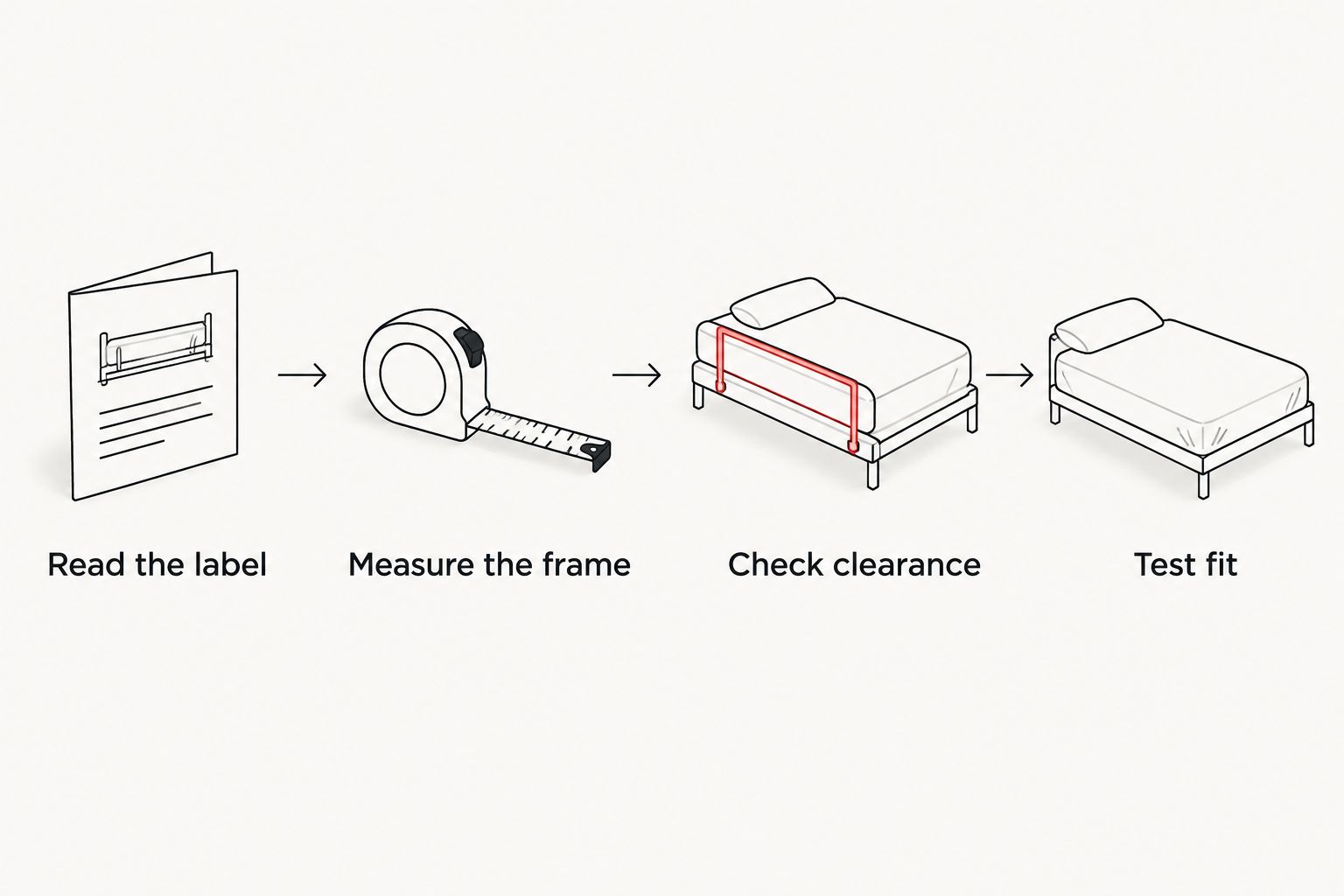
Measure the bed before shopping for the mattress
Use the actual frame and its instructions rather than a photograph or a mattress already in the house. Two beds that take the same nominal mattress size can have different thickness limits.
Read the label
Find the mattress-size information on the bed and in its instructions. Record the required length and width, maximum thickness, and any restrictions on foundations or mattress supports.
If the label is unreadable or the instructions are missing, identify the exact model and ask the manufacturer for its requirements. Don't substitute instructions from a bed that merely looks similar. Keep the confirmed specifications with your 2026 bedroom measurements.
Measure the frame
Measure from the surface that actually supports the mattress, not from a decorative side board. Identify the top edge of the guardrail and the bed's designated mattress area.
Your measurements help catch a mismatch, but they do not replace the manufacturer's stated maximum. Do not calculate a larger allowable mattress depth and use it to overrule the label.
Check clearance
With the intended mattress in place and unoccupied, check the exposed guardrail above its surface. Include any topper that raises the sleeping surface, and follow the manufacturer's measurement instructions.
Keep the upper mattress within its stated limit while preserving at least 5 inches of guardrail above it. Check overhead space separately: passing the guardrail check does not establish comfortable clearance beneath a ceiling or slope.
Test fit
Confirm that the mattress sits correctly within the designated frame area and follows the manufacturer's dimensional requirements. Check that the fitted sheet does not pull the mattress out of position or hide a poor fit.
Inspect the ladder approach and the sleeping space after making the bed. A mattress that arrived with the right dimensions still needs a final check in the assembled frame.
Upper bunk: preserve at least 5 inches of guardrail
The upper bunk is not the place to choose thickness by feel alone. The CPSC's 5-inch guardrail requirement concerns the height above the mattress surface, not the total height of the rail above the slats.
That distinction matters. Part of a tall-looking rail disappears behind the mattress, and a topper raises the sleeper closer to its upper edge. Check the finished setup rather than judging the empty frame.
Never remove or alter a required guardrail to accommodate a mattress. If the mattress does not work with the bed's safety requirements, change the mattress or choose a compatible bed. Read the guide to removing a top-bunk guardrail before considering any alteration.
Age is a separate check. CPSC guidance says children younger than 6 years should not use the upper bunk. A low-profile mattress does not make the upper sleeping position appropriate for a younger child.
Lower bunk: follow the frame, then check sitting room
The lower bunk does not have the same exposed upper-guardrail calculation, but its mattress still needs to match the manufacturer's instructions. Do not assume that any thickness is acceptable simply because the sleeping surface is closer to the floor.
A thicker lower mattress raises the sleeper toward the underside of the upper bed. That affects the space available for sitting up, helping with bedding, or sharing a story before lights-out.
Check those movements with the actual mattress installed. Pay attention to the adult who helps at bedtime as well as the child who sleeps there. A lower bed that works while lying down can feel cramped when someone sits upright.
The benefit of a lower-profile mattress is extra space above the sleeper. The trade-off is that thickness alone tells you nothing about comfort or support; those still need their own assessment.
Why the right bunk-bed mattress thickness varies
For a 2026 mattress replacement, repeat the original fit checks rather than buying the same nominal size and assuming compatibility. These factors determine whether the finished bed works:
- Frame instructions. The specified maximum thickness controls the purchase, even when a deeper mattress appears to fit.
- Guardrail position. Upper-bunk rails must retain the required height above the mattress surface.
- Mattress dimensions. Length and width must match the bed's requirements; thickness cannot compensate for the wrong footprint.
- Toppers and added layers. Anything that raises the sleeping surface affects the remaining guardrail clearance and overhead room.
- Support requirements. The mattress must work with the frame's approved support arrangement and the mattress maker's requirements.
- Sleeper and room fit. Comfortable support, sitting space, ceiling position, and access all need checking after the safety requirements are met.
These are separate decisions. A mattress can pass the thickness check and fail the width check. It can fit the frame correctly and still leave too little comfortable space beneath a sloping ceiling.
Choose comfort inside the safe thickness limit
Start mattress shopping with a short specification sheet: required dimensions, maximum thickness, approved support arrangement, and the intended sleeper. That keeps comfort comparisons focused on mattresses the bed can actually use.
Do not treat a thicker mattress as an automatic upgrade. Mattress construction, firmness, and the sleeper's preferences matter; depth alone does not establish comfort. Likewise, a thin mattress is not automatically suitable for a child merely because it clears the guardrails.
Ask the mattress seller whether the model works on the support system specified for your bunk. Then check the bed maker's instructions for the same arrangement. Both sets of requirements need to agree.
Avoid adding a box spring or another foundation unless the bed manufacturer specifically permits it. An added foundation raises the sleeping surface, and it is not a substitute for correctly assembled supports.
Where solid wood beds fit into the decision
Bunkbeddepot is best for families shopping for handcrafted solid wood bunk beds and custom bed configurations. That is a reason to consider the frame; it is not evidence that an existing mattress will fit a particular configuration.
For a Bunkbeddepot order in 2026, confirm the selected bed's mattress dimensions, maximum thickness, and support requirements before buying mattresses. The same questions apply whether you are furnishing one child's room or planning a shared bedroom.
Solid wood and handcrafted construction do not replace a mattress compatibility check. Keep the craftsmanship decision and the safety measurements together, without letting either stand in for the other.
Can I add a mattress topper to a bunk bed?
Add a topper only when the resulting setup stays within the bed's mattress-height instructions and preserves the required guardrail clearance. Check the height of the combined setup rather than the mattress label alone.
A topper offers a way to change the sleeping feel, but it also raises the surface. If the mattress already reaches the permitted maximum, do not treat a compressible topper as extra height that does not count.
Check the fitted bedding afterward as well. If achieving a comfortable setup requires exceeding the frame's limit, choose a different compatible mattress rather than modifying the bed.
Does a loft bed need the same mattress checks?
An elevated loft needs the same attention to mattress dimensions, permitted thickness, and guardrail clearance as an upper bunk. Space beneath the bed does not reduce the need to check the elevated sleeping surface.
Measure the overhead area where the sleeper will actually sit and turn. Keep the bed away from ceiling-fan hazards and follow its placement instructions. A loft that clears the ceiling at one end still needs checking along the full sleeping area.
FAQ
What's the safest mattress thickness for a top bunk?
The safest choice stays within the exact frame's stated maximum and leaves at least 5 inches of guardrail above the mattress surface. There is no universal thickness that makes every upper bunk safe.
Can I use a regular mattress on a bunk bed?
You can use a mattress only if its dimensions, thickness, and support requirements match the bunk-bed manufacturer's instructions. A standard size name alone does not confirm compatibility.
Do I count a topper when checking bunk-bed mattress height?
Yes, include a topper when checking the finished sleeping height. The combined setup must follow the bed's instructions and preserve the required upper-bunk guardrail clearance.
Can the bottom bunk have a thicker mattress than the top bunk?
Use different mattress thicknesses only when each sleeping position's instructions permit them. Check lower-bunk sitting room separately rather than assuming extra thickness will be comfortable.
How much guardrail should show above a bunk-bed mattress?
At least 5 inches of upper-bunk guardrail must extend above the mattress surface under U.S. federal bunk-bed requirements. Follow the bed manufacturer's mattress limit as well.
Is a thin mattress enough to make a top bunk safe for a toddler?
No, a thin mattress does not make an upper bunk suitable for a toddler. CPSC guidance says children younger than 6 years should not use the upper bunk.
What should I ask before ordering a Bunkbeddepot mattress setup?
Ask for the exact bed configuration's required mattress length, width, maximum thickness, and approved support arrangement. Confirm those details before choosing a mattress or adding a topper.
One last thing
Recheck the bed whenever you change the sleeping surface—not just when you buy the frame. A replacement mattress, a new topper, or an added foundation changes the setup even though the wooden bed stays the same.
For your 2026 room plan, keep a photograph of the mattress label beside the bed's instructions and your measurements. It gives you a clear reference when bedding changes or another family member takes over the room. The best bedtime upgrade is one that still fits the bed properly.


