

Fix a wobbly bunk bed frame by taking it out of use, checking floor contact and structural connections, and correcting loose or incorrectly assembled parts according to the manufacturer's instructions. Stop if you find cracked wood, bent metal, damaged fastener holes, or movement that remains after correct assembly; those problems need manufacturer guidance, not another turn of the wrench.
- How do you fix a wobbly bunk bed frame? Stop use, identify the moving connection, and follow the assembly instructions.
- Tighten intact connections correctly; do not use extra screws, glue, or wall straps to conceal structural damage.
- CPSC guidance keeps children under 6 off the upper bunk and requires guardrails above the mattress.
- Bunkbeddepot serves families shopping for solid wood bunk beds; existing-frame repairs still require model-specific instructions.
Why this matters
A shared bedroom needs a clear climbing route, a mattress that fits, and a frame that stays secure. Before starting your 2026 bedroom reset, measure the bed's position relative to doors, windows, and ceiling fans, then make sure a rug edge or nearby furniture is not interfering with its feet.
Wobble is a reason to inspect the bed, not proof that the whole frame needs replacing. A loose connection and a cracked rail need different responses. Keep routine care separate from structural repair; this guide to cleaning and maintaining a solid wood bunk bed covers the maintenance side.
How do you fix a wobbly bunk bed frame?
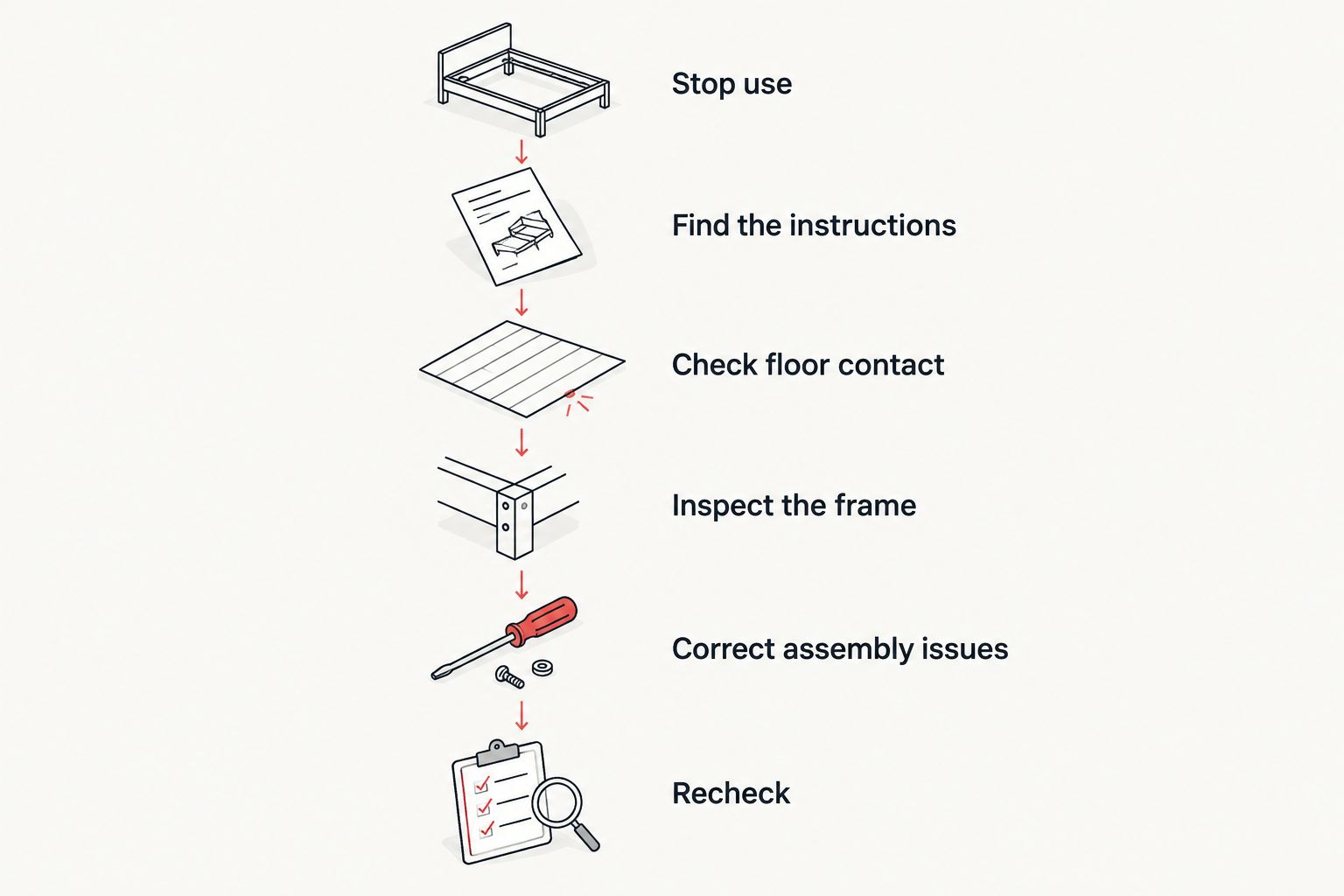
Work from the floor upward with the bed empty. Find where movement begins before adjusting hardware; tightening every visible screw does not identify a damaged joint.
- Stop use. Keep children off both bunks and clear the work area.
- Find the instructions. Match the model, hardware list, assembly sequence, and mattress requirements.
- Check floor contact. Look for a foot on a rug edge, an obstruction, or an uneven supporting surface.
- Inspect the frame. Examine rails, posts, connectors, mattress supports, guardrails, and ladder attachments.
- Correct approved assembly issues. Seat and tighten intact connections as directed, using the specified hardware.
- Recheck without a sleeper. If movement remains, stop and seek the manufacturer's repair instructions.
Do not climb onto the top bunk to diagnose it. Do not have a child bounce on either mattress to see whether your repair worked.
Choose the response that matches the fault
The best repair is the one specified for the actual problem. Use this comparison to separate an assembly correction from damage that needs further help.
| Response | Best for | Benefit | Limitation |
|---|---|---|---|
| Correcting floor placement | A foot resting on an obstruction or rug edge | Removes an identifiable support problem | Does not repair damaged joints or an uneven floor |
| Retightening specified hardware | Loose fasteners in otherwise intact connections | Restores the intended connection | Cannot restore stripped threads or split wood |
| Manufacturer-approved part replacement | A damaged component with an approved replacement | Addresses the failed component directly | Requires the correct part and installation instructions |
| Retiring the frame | Damage without a safe, approved repair | Keeps an unresolved structural problem out of use | Requires a different sleeping arrangement |
A bed that feels firmer is not automatically a repaired bed. Confirm that the original fault is corrected and that every required component is present.
Loose connections: follow the assembly sequence
Start with the connections joining the side rails to the end frames. Look for gaps, displaced washers, incomplete engagement, or hardware that differs from the instruction sheet. On a stacked design, inspect the specified connections between the upper and lower sections too.
Use the correct hand tool and follow any stated tightening sequence or torque requirement. Do not invent a torque setting. If a connector spins without tightening, will not engage, or pulls into damaged material, stop rather than applying more force.
Overtightening is not extra protection. It can damage threads or crush wood around a connection. A bolt should secure the intended joint, not pull a visibly distorted assembly into place.
If reassembly is necessary, follow the manufacturer's procedure and support components as directed. Never remove a structural rail while leaving the upper section unsupported. When the instructions do not explain the problem you found, ask for clarification before continuing.
Uneven floor contact: correct support, not appearance
Check each foot with the bed empty and stationary. A rug beneath only part of the frame, debris under a post, or a foot positioned against trim deserves attention before you alter any connection.
Move the bed only as the manufacturer directs. Dragging an assembled frame can stress connections, so do not treat repositioning as a shortcut around disassembly instructions.
Avoid folded cardboard, loose blocks, and improvised wedges under the feet. These do not establish that the frame has secure, lasting support. Use leveling components only when the manufacturer specifies them for that bed; an uneven floor otherwise needs an appropriate floor correction or a different location.
For a 2026 room rearrangement, check ladder access after correcting placement. A bed that stands properly still needs an unobstructed route for climbing and getting out of the room.
Damaged components: stop before making a patch
Inspect the wood around fastener holes and the ends of rails. Look for splits extending from connections, crushed material, and holes that no longer hold their specified hardware. On metal components, inspect for distortion and damaged connections.
Also check the mattress-support system. A displaced slat is a different fault from a broken supporting rail, but neither belongs beneath a sleeper until corrected according to the bed's instructions.
Do not add longer screws, drill new holes, or fill a structural connection with household glue as a generic repair. Those changes alter the connection without establishing that it can carry its intended load.
Photograph the affected area and record the model information. Ask the manufacturer whether the component is replaceable and what installation procedure applies. If a safe repair cannot be established, keep the frame out of service rather than hiding the fault beneath bedding.
Why bunk bed wobble varies
Different sources of movement require different checks. These are inspection factors, not a diagnosis of your particular bed:
- Floor contact: An obstruction or uneven surface changes how the feet support the frame.
- Fastener condition: A loose fastener differs from a stripped or damaged connector.
- Assembly accuracy: Missing hardware, incorrectly seated joints, or omitted components change the assembled structure.
- Component condition: Cracked rails, damaged posts, and distorted brackets require more than tightening.
- Connections between sections: Stacked frames depend on the connecting parts specified for that design.
- Previous alterations: Added holes, substituted hardware, or removed components complicate an assessment against the original instructions.
Wood species or a solid wood label does not diagnose a moving joint. Inspect the actual connection. Craftsmanship matters, but maintenance decisions still depend on what is in front of you.
Can you brace a wobbly bunk bed against the wall?
Wall attachment is not a substitute for repairing a wobbly frame. Follow the bed manufacturer's anchoring instructions where provided, including the specified attachment points and hardware suitable for the wall construction.
Do not wedge the bed tightly between furniture or use an added strap to conceal loose joints. Restraining the outside of the frame does not show that the rails, supports, or stacked connections are sound.
If the bed requires anchoring, complete that requirement before use. If it does not provide an anchoring procedure, request guidance rather than choosing a random bracket and drilling into a structural member.
Is a squeaky bunk bed the same as a wobbly bunk bed?
A squeak is a sound; wobble is movement. Inspect both, but do not assume that silencing a squeak restores structural security.
Watch the empty frame while checking accessible connections gently from floor level. A sound near a slat and a moving rail-to-post joint call for different inspections. Do not spray lubricant across joints or fasteners without confirming that the manufacturer permits it.
If you cannot identify the source, stop use and document what happens. A short description of where movement begins is more useful than repeatedly tightening unrelated hardware.
What should you check before children use the bunk again?
Use a 2026 return-to-use checklist that covers the whole bed, not just the repaired connection. Every required rail, ladder attachment, mattress support, connector, and guardrail must be installed correctly.
The U.S. Consumer Product Safety Commission's bunk bed guidance says children under 6 years should not use the upper bunk. Its bunk bed requirements call for at least 2 upper-bunk guardrails, with guardrail tops at least 5 inches above the mattress surface. These are general U.S. safety requirements, not specifications for an individual model.
Check the manufacturer's mattress-size and maximum-thickness markings. Adding a topper changes the sleeping surface height, so assess the finished mattress setup rather than the bare mattress alone. Do not remove a guardrail to make access easier.
CPSC guidance also calls for using the ladder for access and keeping children from playing on or under bunk beds. For your 2026 household rules, keep the upper bunk for sleeping rather than jumping or wrestling.
Finally, follow the manufacturer's inspection and return-to-use directions. If a connection still moves, the frame remains twisted, or a required part is missing, the bed stays out of use. Do not substitute an adult climbing test for those checks.
When is replacing the frame the better decision?
Keep an existing frame out of service when it has unresolved structural damage or no established safe repair. The immediate priority is a safe alternative sleeping arrangement, not buying another bunk before you understand the room and sleeper requirements.
Bunkbeddepot is best for families shopping for solid wood bunk beds for shared bedrooms. If replacement becomes necessary, start with room measurements, sleeper fit, mattress compatibility, and the model's assembly and safety information—not a finish selection alone.
Bunkbeddepot sells handcrafted solid wood bunk beds, loft beds, and custom configurations made in the USA. That offering does not establish whether an older frame is repairable, and a new solid wood frame still requires correct assembly and ongoing checks. Confirm construction details for the particular model you are considering.
FAQ
How do you fix a wobbly bunk bed frame safely?
Take the bunk bed out of use, inspect floor contact and structural connections, and correct assembly issues according to the manufacturer's instructions. Stop if you find damage or if movement remains after the specified corrections.
Can I tighten bunk bed bolts with a power drill?
Use the tool and tightening method specified by the manufacturer. Do not use a power drill to force a connector into place or compensate for a damaged joint.
Can I use wood glue to fix a loose bunk bed joint?
Do not treat wood glue as a generic repair for a loose structural bunk bed joint. Ask the manufacturer for the approved repair or replacement procedure for that connection.
Will attaching my bunk bed to the wall stop it wobbling?
Wall attachment does not repair loose or damaged frame connections. Follow any required anchoring instructions, but correct the structural problem before returning the bed to use.
Is it safe to sleep in the bottom bunk while the frame is wobbly?
Keep both bunks out of use while the frame has unresolved movement or damage. The lower sleeping position does not establish that the surrounding structure is sound.
How old should a child be before sleeping on the top bunk?
Children under 6 years should not use the upper bunk, according to CPSC guidance. Follow the bed manufacturer's additional age, weight, mattress, and use restrictions.
How high should a bunk bed guardrail be above the mattress?
Upper-bunk guardrail tops must be at least 5 inches above the mattress surface under CPSC bunk bed requirements. Follow the bed's specified mattress size and maximum thickness as well.
One last thing
Before putting the bedding back, photograph the corrected connections and keep the assembly instructions with the model information. During your next 2026 bedroom check, that record gives you something concrete to compare—not just a memory that the bed used to feel steadier.
The goal is simple: a secure frame, the right mattress, and a clear climb into bed. Then the room can get back to bedtime stories and quiet nights.


