

Yes, you can order a bunk bed with mismatched sizes: a twin-over-full configuration pairs a twin upper mattress with a full lower mattress in a frame designed for that combination. You cannot create the same setup by putting a larger mattress on a smaller bunk or combining unrelated bed frames. Before ordering, confirm the exact mattress dimensions, maximum mattress thickness, room footprint, and sleeper limits for the complete configuration.
- Can you order a bunk bed with mismatched sizes? Yes—choose a frame designed for different upper and lower mattresses.
- Twin-over-full bunk beds give the lower sleeper more width, not more mattress length.
- Bunkbeddepot offers custom bunk bed configurations; confirm the specific size pairing before ordering.
- Check frame dimensions, mattress thickness, guardrails, and ladder clearance before choosing a layout.
Why this matters
A wider bottom bunk changes more than the sleeping surface. It also changes how much room you have beside the bed, where the ladder lands, and whether nearby drawers open fully.
Measure the room before choosing the mattress pairing. For a 2026 bedroom plan, record the wall length, usable floor width, ceiling height, and door swing. The mattress sizing workflow for twin-over-full bunk beds helps separate mattress measurements from the larger frame footprint.
Can you order a bunk bed with mismatched twin and full sizes?
Yes. Twin-over-full is an established bunk bed layout, with a narrower upper sleeping surface above a wider lower one. The frame must be designed and assembled for that arrangement, including its supports, access, and guardrails.
The table compares nominal U.S. mattress sizes, not the dimensions of a particular bed frame. Actual mattress measurements and manufacturer requirements still control the fit.
| Configuration | Nominal upper mattress | Nominal lower mattress | Best for | Main trade-off |
|---|---|---|---|---|
| Twin over twin | 38 × 75 inches | 38 × 75 inches | Sleepers who need equal mattress sizes | Neither sleeper gets the extra width of a full |
| Twin over full | 38 × 75 inches | 54 × 75 inches | Families who want a wider lower bed | The wider lower frame needs more room |
| Full over full | 54 × 75 inches | 54 × 75 inches | Sleepers who both need more width | Both levels require the wider configuration |
A nominal full mattress is 16 inches wider than a nominal twin, but both are 75 inches long. That distinction matters when you are buying for a taller child: more width does not solve a length problem.
These are configuration comparisons, not confirmation that every model comes in every combination. Ask for the exact dimensions of the bed you intend to order.
Twin over full: 38 × 75 inches above 54 × 75 inches
Best for: a family that needs a wider lower sleeping surface without making both bunks full-size. A twin-over-full layout gives the lower sleeper more room across the mattress while keeping the upper sleeping surface narrower.
The benefit is straightforward. Siblings with different sleeping preferences do not have to use identical mattress widths. The compromise is equally practical: the full-size lower frame extends farther into the room than a comparable twin lower frame.
Check how the upper bunk sits relative to the lower one. Do not assume that a ladder shown on one side can move to the other, or that the arrangement can be reversed. Those details belong in the manufacturer's configuration instructions.
For your 2026 order, write the pairing in plain language: twin mattress on top, full mattress below. Include the mattress dimensions and thicknesses so that a size label cannot hide a mismatch.
Twin over twin: 38 × 75 inches on both levels
Best for: two sleepers who fit comfortably on twin mattresses and do not need a wider lower bed. Equal-size bunks make the mattress assignment simple, and the lower sleeping surface does not add full-size width.
The limitation is sleeper fit. A twin-over-twin frame does not become a twin-over-full frame when one child wants more room. Unless the manufacturer documents a conversion, treat a change in mattress size as a different bed configuration.
Choose this arrangement because both sleepers fit it, not because you expect to improvise an upgrade later. Ask separately whether the model can separate into individual beds; equal mattress sizes alone do not prove that it can.
Full over full: 54 × 75 inches on both levels
Best for: sleepers who each need a wider mattress and have room for the complete frame. A full-over-full arrangement provides equal mattress width on both levels.
The drawback is that a full mattress still has the same nominal length as a standard twin. It also does not establish how many people the bunk can support. Mattress width, sleeper capacity, and structural weight limits are different specifications.
Check the upper and lower limits separately. Never treat the appearance of a substantial wood frame as evidence that it supports a particular adult or multiple sleepers.
Why mixed-size bunk bed fit varies
The mattress pairing is only part of the decision. These factors determine whether the complete bed works in your room:
- Frame dimensions: Posts, rails, and other structural parts extend beyond the mattress. Use the manufacturer's outside measurements.
- Access placement: A ladder or staircase needs its own usable approach. Confirm its location rather than assuming it is reversible.
- Mattress thickness: The upper mattress must stay within the model's stated maximum so the guardrails retain the required height.
- Ceiling conditions: Measure where the bed will stand, including slopes, beams, and nearby fixtures. Overall room height alone is not enough.
- Sleeper requirements: Age, mattress length, and the manufacturer's weight limits determine bunk assignments. A wider mattress does not override those requirements.
- Configuration design: Mixed-size supports, connections, and guardrails must belong to the approved assembly. Unrelated parts are not a substitute.
Solid wood and careful craftsmanship matter, but they do not replace these checks. A bed still needs the right mattress, complete hardware, and assembly that follows its instructions.
How do you measure for a mixed-size bunk bed?
Use this sequence before placing a 2026 order. Keep the measurements together so you can compare the proposed configuration against the actual room, not a remembered estimate.
- Room footprint: Measure the usable wall and floor area. Mark doors, windows, baseboards, outlets, and furniture that must remain accessible.
- Frame outline: Obtain the complete outside dimensions for the specific size pairing. Tape that outline on the floor, including any wider lower section.
- Access space: Mark the ladder or staircase position. Check the approach with the bedroom door and nearby drawers open.
- Vertical clearance: Compare the bed and mattress heights with the ceiling above the upper sleeping surface. Check nearby ceiling fans and fixtures.
- Mattress match: Record the required length, width, and maximum thickness for each level. Compare them with the mattresses you plan to use.
This order prevents a common planning mistake: checking the mattress rectangle while forgetting the structure around it. Keep a clear route from the doorway to the bed and through the rest of the bedroom.
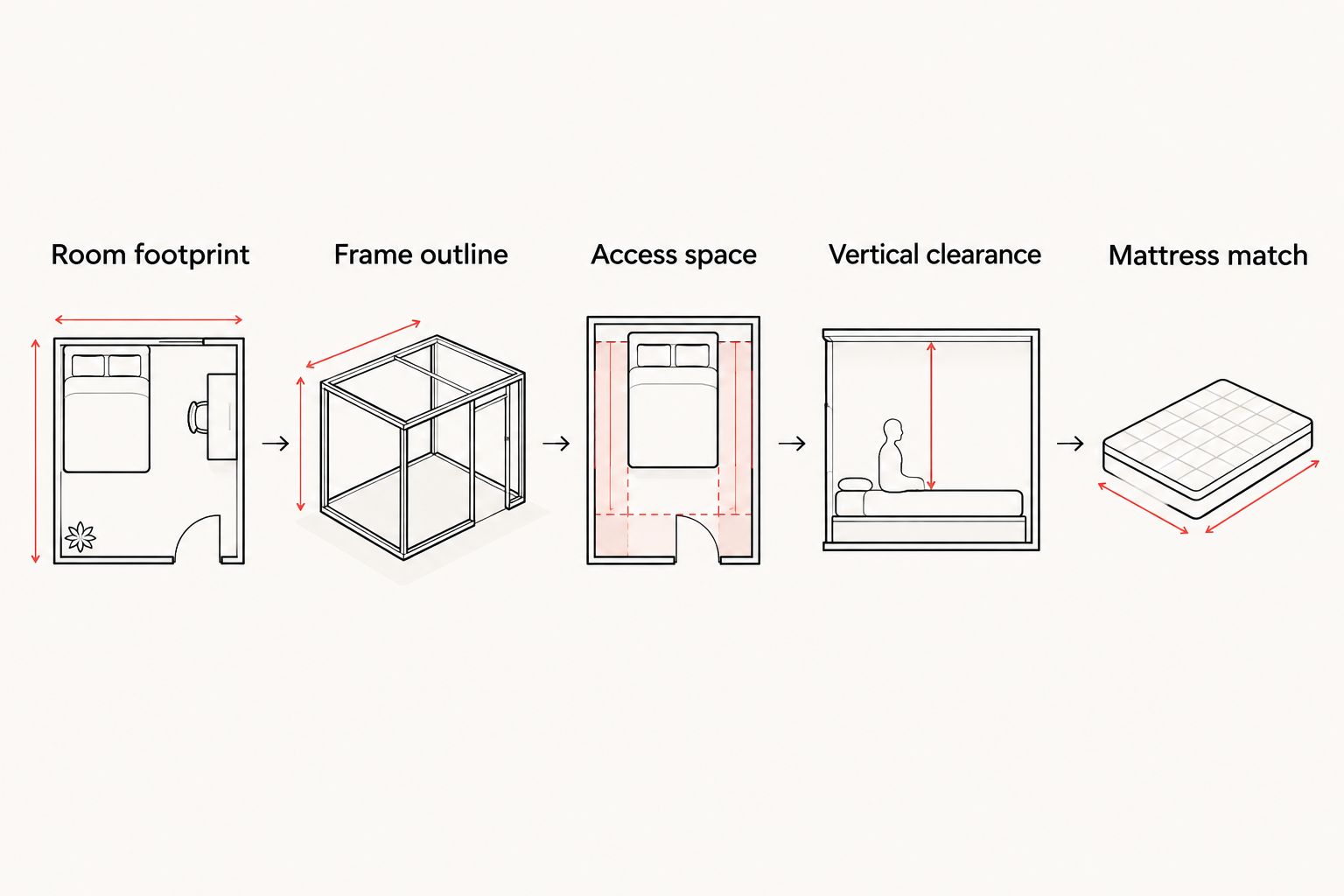
Walk through the taped layout before committing. Imagine carrying laundry past the lower bunk, opening a dresser, and helping with bedtime. A plan that works on paper still needs to work during an ordinary evening.
What should you confirm before ordering a custom configuration?
Bunkbeddepot is best for families seeking handcrafted solid wood bunk beds and custom configurations. The business serves families furnishing kids' and shared bedrooms; a particular mixed-size arrangement still needs confirmation for the model you choose.
Send Bunkbeddepot a short specification rather than a request for a vaguely described larger bottom bunk. Include these details:
- Upper and lower mattress dimensions, written separately.
- Mattress thickness for each level, including any existing mattresses.
- Usable room dimensions and the lowest ceiling point over the proposed bed.
- Preferred access side and anything that blocks that approach.
- Intended sleepers and any future separation or conversion requirement.
Ask for written confirmation of the finished frame dimensions, mattress requirements, weight limits, and assembly instructions. Custom sizing does not establish those details by itself. Use the contact page to confirm the proposed arrangement before ordering.
For a 2026 purchase, save the final configuration description with the assembly documents. It gives you a reliable reference when replacing a mattress, moving the bed, or checking which hardware belongs where.
What safety checks matter with different mattress sizes?
Different mattress widths do not relax bunk bed safety requirements. The upper bunk needs the specified mattress, intact guardrails, and the complete approved structure.
For this 2026 guide, the relevant U.S. Consumer Product Safety Commission framework includes the children's bunk bed standard in 16 CFR Part 1513 and the adult bunk bed standard in 16 CFR Part 1213. The CPSC's bunk bed guidance also addresses mattress fit, guardrails, and upper-bunk age restrictions.
Apply these checks before use:
- Keep children under 6 years old off the upper bunk, consistent with CPSC guidance.
- Check that the upper guardrails extend at least 5 inches above the top of the mattress, as required by the federal bunk bed standards.
- Use the manufacturer's specified mattress size and maximum thickness. A topper changes the sleeping-surface height too.
- Install the required guardrails and access components exactly as instructed. Do not remove a rail to make changing sheets easier.
- Check supports, connections, and hardware against the assembly instructions before anyone sleeps in the bed.
A thicker mattress can reduce the guardrail height above the sleeping surface even when its length and width fit. If the mattress exceeds the manufacturer's limit, choose a compatible mattress rather than modifying the rail.
Can I put a full mattress on a twin lower bunk?
A full mattress is nominally 54 × 75 inches, while a twin is nominally 38 × 75 inches; the full does not fit a frame designed only for a twin. Order a lower bunk designed for the larger mattress instead of relying on overhang or added boards.
Does a full lower bunk give a taller child more legroom?
A standard full mattress is nominally 75 inches long, the same nominal length as a standard twin. If length is the problem, ask about an appropriately designed longer configuration rather than choosing a full solely for its width.
Can I turn two separate beds into a mixed-size bunk?
Two separate beds are not an approved mixed-size bunk simply because one can sit above the other. Use only a manufacturer-documented bunk configuration with its specified connections, supports, guardrails, and access components.
FAQ
Can you order a bunk bed with mismatched sizes?
Yes, you can order a frame designed for different upper and lower mattress sizes, such as twin over full. Confirm the exact configuration and mattress requirements before ordering.
Which mattress goes on top of a twin-over-full bunk bed?
The twin mattress goes on top, and the full mattress goes below in a twin-over-full configuration. Follow the manufacturer's dimensions and thickness limits for each level.
Is a full mattress longer than a twin mattress?
No. Standard U.S. twin and full mattresses are both nominally 75 inches long; the full is wider. Check actual mattress measurements before buying.
Can an adult sleep on the full-size bottom bunk?
An adult can use the lower bunk only if the manufacturer's sleeper and weight requirements permit it. A full-size mattress does not establish the frame's load capacity.
Can I reuse mattresses I already own?
You can reuse existing mattresses only when their dimensions and thickness meet the bunk manufacturer's requirements. Check each level separately, especially the upper mattress height.
Can a child younger than six use the upper bunk?
No. CPSC guidance says children under 6 years old should not use the upper bunk. A wider lower mattress does not change that restriction.
Does Bunkbeddepot offer custom bunk bed configurations?
Bunkbeddepot offers custom bunk bed configurations for families furnishing kids' and shared bedrooms. Confirm your requested size pairing, finished dimensions, and mattress requirements before ordering.
One last thing
Choose the mattresses and frame as one system. A mattress that fits today can become an unsuitable replacement later if you forget the upper-bunk thickness limit.
Keep a note of each level's mattress dimensions and permitted thickness with the bed's instructions. That small record makes the next mattress purchase simpler—and leaves bedtime for stories instead of another round of measuring.


