

Yes, adults can sleep comfortably on bunk beds when the specific bed is rated for the intended sleeper, the mattress fits, and there is enough room to sit up and climb safely. A frame that looks sturdy is not proof of adult suitability. For everyday use, check the load limits, sleeping dimensions, mattress restrictions, and access before choosing either bunk.
- Can adults sleep on bunk beds? Yes, with verified weight limits, suitable mattress dimensions, and safe access.
- Bunkbeddepot is best for families seeking handcrafted solid wood bunk beds for shared bedrooms.
- A longer mattress helps tall sleepers; a wider mattress provides turning room but does not increase frame capacity.
- Check headroom above the mattress, not just the distance between the bed frame and ceiling.
Can adults sleep comfortably on bunk beds?
Adults can sleep comfortably on a bunk bed designed to support them, but adult age alone does not establish suitability. Match the person to the exact configuration. The upper and lower sleeping surfaces need separate checks, even when they share the same frame.
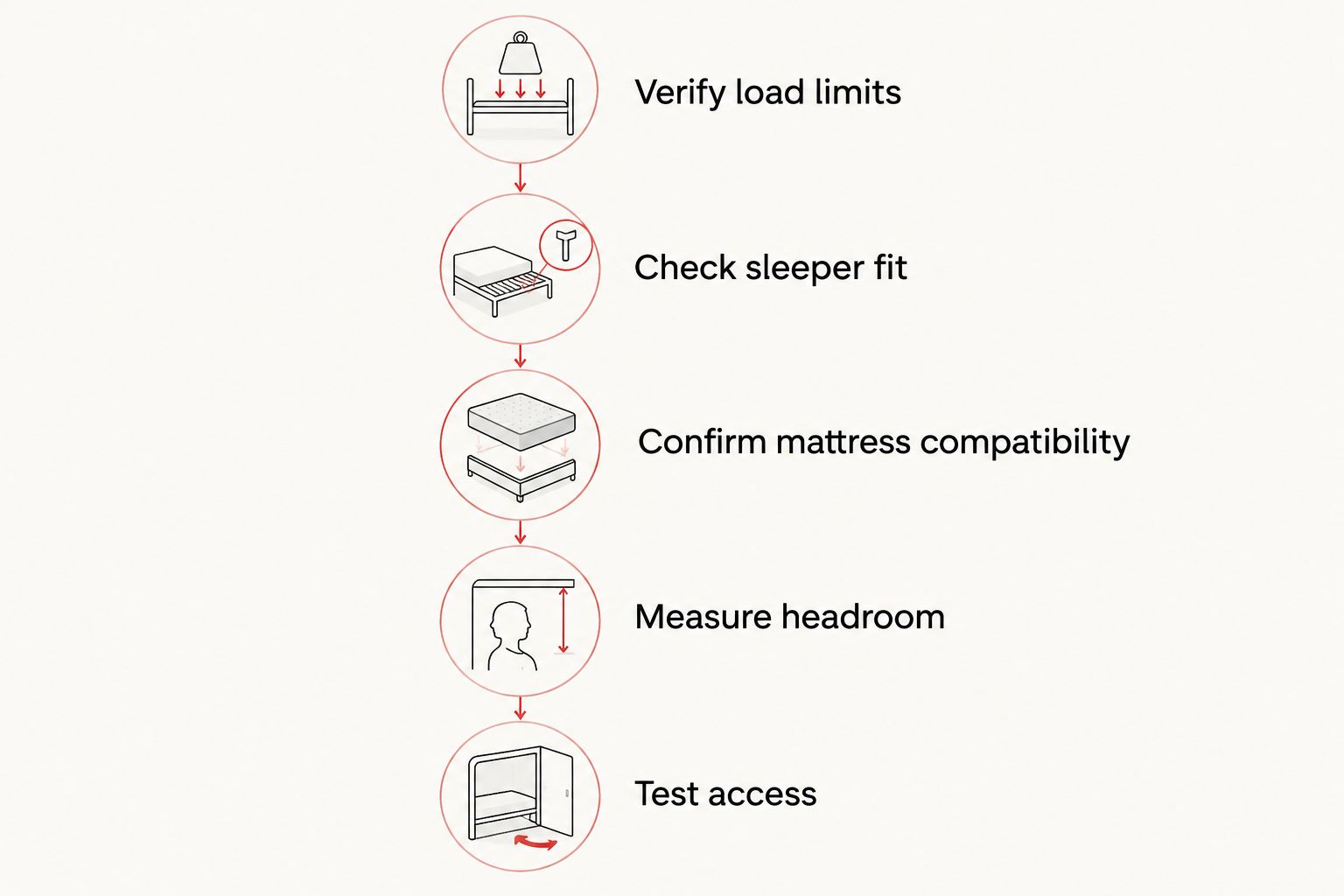
Use this sequence before buying a bunk bed in 2026:
- Verify load limits. Read the manufacturer's limit for each bunk and confirm whether it includes the mattress and bedding.
- Check sleeper fit. Compare the adult's height and preferred sleeping position with the mattress dimensions.
- Confirm mattress compatibility. Follow the specified mattress size, support requirements, and maximum thickness.
- Measure headroom. Account for the mattress surface, ceiling, overhead fixtures, and space below the upper bunk.
- Test access. Check whether the intended sleeper can climb, turn, and descend without awkward movements.
Passing one check does not cancel another. A long mattress does not solve a low ceiling, and a high load rating does not make a steep ladder comfortable.
Why this matters
A bunk bed changes more than where you put a mattress. It also changes how you get into bed, sit up, change the sheets, and move around the room at night.
Bunkbeddepot sells handcrafted solid wood bunk beds, loft beds, and custom bed configurations for family bedrooms. That makes room planning relevant, but you still need the specifications for the particular bed you are considering. Choose by documented fit, not by a photograph or the word solid.
Think about the real routine. A parent reading beside a child, an adult visiting for a weekend, and someone sleeping in the bed every night place different demands on the layout. Check each intended use before assigning the bunks.
Mattress size: length and width solve different problems
Start with the sleeper, then choose a compatible frame. Standard US mattress dimensions provide a useful comparison, although actual measurements vary by manufacturer and construction.
| Mattress size | Standard dimensions | Best for | Main limitation |
|---|---|---|---|
| Twin | 38 × 75 inches | One adult who fits comfortably within the shorter length | Limited length and turning space |
| Twin XL | 38 × 80 inches | A taller single sleeper who needs extra length | No extra width compared with a twin |
| Full | 54 × 75 inches | One adult who wants more turning space | The same standard length as a twin |
| Queen | 60 × 80 inches | An adult seeking more length and width | Requires a larger compatible frame and more floor space |
These are mattress categories, not a list of sizes offered on every bunk bed. Never squeeze a larger mattress into a smaller frame or assume that a close fit is sufficient.
The distinction matters most when you compare full and twin XL. A standard full mattress adds width, not length. If your feet already reach the end of a twin, moving to a full does not address that problem.
For a 2026 purchase, compare the mattress maker's actual measurements with the bed manufacturer's required dimensions. The mattress sizing guide for twin-over-full bunk beds is a useful next step when the upper and lower bunks need different mattresses.
Lower bunk: best for adults who want to avoid climbing
A suitable lower bunk is the practical first choice for an adult who does not want to use a ladder. It removes the climb, but it does not remove the need to verify the load rating and sleeping dimensions.
Check the space above your head while sitting on the intended mattress. The underside of the upper bunk can interfere with reading, dressing, or getting out of bed. Measure to the lowest obstruction, not an open space between support members.
Also check the bed's entry height. A low sleeping surface and a high mattress edge create different movements when you stand up. The right choice is the one the intended sleeper can use comfortably, not simply the lowest bunk available.
Upper bunk: best for adults comfortable with elevated access
An upper bunk works for an adult only when its rating, mattress setup, guardrails, and access suit that person. Comfort includes getting down in the dark, not just lying still after climbing up.
Inspect where the ladder or steps meet the sleeping platform. You need a manageable transition into the bed, with secure handholds and the manufacturer's required access arrangement. Do not use nearby furniture as an extra step.
The trade-off is clear: an upper bunk stacks sleeping space within the room, but it requires elevated access every time. If climbing is difficult, choose a suitable lower sleeping position rather than treating that difficulty as something to tolerate.
Why adult bunk-bed comfort varies
The same bunk can feel comfortable to one adult and cramped to another. For your 2026 room plan, focus on these factors rather than a general adult-friendly label:
- Sleeper dimensions. Height affects usable mattress length; shoulder room and sleeping position affect the width you need.
- Load-rating terms. Confirm the limit for each sleeping surface and what the manufacturer includes in that limit.
- Mattress construction. Support and firmness affect comfort, while thickness affects the mattress's relationship to the guardrail.
- Vertical clearance. Both the upper and lower sleeper need space above the finished mattress surface.
- Access layout. Ladder placement, entry position, and nearby furniture affect the route into and out of bed.
- Assembly condition. Loose hardware, damaged supports, or an incorrectly assembled frame require attention before use.
These factors work together. Choosing a thicker mattress to improve comfort can reduce guardrail clearance, so solve the mattress and frame requirements as one decision.
How do you check a bunk bed's weight limit for an adult?
Read the manufacturer's instructions for the exact model and configuration. Do not transfer a rating from a similar-looking bed, another size, or a different arrangement from the same seller.
Ask whether the stated limit refers to the sleeper alone or the total supported load. Also establish whether the upper and lower bunks have different limits and whether the access structure has separate restrictions. Keep the answers with the assembly instructions.
A load limit is a ceiling to follow, not a comfort score. It does not tell you how spacious the mattress feels or whether the sleeper can use the ladder safely. Likewise, wood thickness and bed weight are not substitutes for a documented rating.
Stop using a bed that has cracked components, missing fasteners, damaged supports, or movement that needs investigation. Tightening instructions and inspection intervals should come from the manufacturer, not a generic schedule.
How much headroom does an adult need on a bunk bed?
An adult needs enough clearance to use the bed without striking the ceiling, upper bunk, or nearby fixtures. There is no single comfort measurement that fits every sleeper and every bunk configuration.
Measure upward from the top of the intended mattress. For the upper bunk, check the ceiling and any sloped section above the sleeper. For the lower bunk, measure to the lowest part of the upper structure.
Then consider sitting posture. A sleeper who reads upright needs a different amount of usable space from someone who only lies down. If you can inspect an assembled example, use a mattress of the permitted thickness when judging that space.
For a 2026 bedroom layout, mark the frame footprint and access route on the floor before ordering. Include doors, drawers, windows, and overhead fixtures in the plan; the mattress outline alone does not show how the bed will work in the room.
Does a thicker mattress make an adult bunk more comfortable?
A thicker mattress is not automatically a better bunk-bed mattress. Choose comfort within the bed manufacturer's permitted thickness and support requirements, not at their expense.
The US Consumer Product Safety Commission's bunk-bed requirements specify that the upper edge of the guardrail must be at least 5 inches above the top of the mattress. For your 2026 safety check, follow the bed's mattress marking and instructions as well; the general guardrail rule is not permission to disregard a stricter model-specific limit.
A topper also raises the sleeping surface. Before adding one, confirm that the complete mattress setup remains within the permitted height and does not reduce the required protection. Do not add a box spring or another support layer unless the bed's instructions permit it.
What should you ask before choosing a solid wood bunk bed?
Solid wood describes a material, not a complete adult-use specification. Ask how the exact bed accommodates your intended sleepers, mattresses, and room.
When discussing a Bunkbeddepot solid wood bunk bed, start with the configuration rather than the finish. Ask for the per-bunk load limits, required mattress dimensions, maximum mattress thickness, assembled footprint, and access arrangement. Confirm each detail for the version you intend to order.
The benefit of planning a family bed carefully is straightforward: the room supports the people who actually use it. The constraint is equally important: customization does not establish a safety rating or guarantee that every requested arrangement is suitable.
For a shared bedroom, describe the full routine. Tell the seller whether an adult will sleep there regularly, visit occasionally, or sit beside a child for bedtime stories. Those uses should inform the questions you ask, not become assumptions about what the frame supports.
FAQ
Can adults sleep on bunk beds every night?
Yes, adults can sleep on bunk beds every night when the exact bed supports the intended sleeper and provides suitable mattress fit, headroom, and access. Check those details for the specific configuration rather than relying on an adult-friendly label.
Is the top bunk safe for an adult?
An upper bunk is suitable for an adult only when the manufacturer's load rating, mattress requirements, guardrails, and access instructions are satisfied. The adult must also be able to climb and descend safely.
Is a full bunk bed better than a twin for an adult?
A full mattress provides more width than a twin, but both have a standard length of 75 inches. Choose according to the sleeper's dimensions and the frame's specifications; extra width does not increase the bed's load rating.
Can two adults sleep together on a lower bunk?
Do not assume a lower bunk supports two adults because its mattress is wide enough. Confirm the manufacturer's occupancy instructions and load limit for that exact sleeping surface.
Can I add a mattress topper to an upper bunk?
Only add a topper if the complete sleeping setup stays within the bed manufacturer's mattress requirements. Added height reduces the distance between the sleeping surface and the top of the guardrail.
Are solid wood bunk beds automatically suitable for adults?
No, solid wood construction alone does not establish adult suitability. Verify the specific bed's load limits, support system, mattress requirements, and access arrangement.
Should an adult with difficulty climbing use the lower bunk?
A suitable lower bunk avoids elevated access and is the practical option when climbing is difficult. Still check its load rating, entry height, and clearance beneath the upper bunk.
One last thing
Measure for the moment you sit up, not just the moment you lie down. A mattress can fit the frame perfectly while the sleeping position leaves you ducking under a beam or upper bunk.
Before choosing a Bunkbeddepot solid wood bunk bed, write down the sleeper's needs beside the room measurements. Leave space for bedtime stories and overnight guests in the plan—but let verified dimensions and safety requirements decide the configuration.


