

Yes—solid wood bunk beds are worth it when the frame fits your room, the mattress meets the bed’s limits, and the configuration suits your family’s sleeping needs. The material alone does not establish safety, strength, or useful life; construction, assembly, and the manufacturer’s instructions matter. In 2026, judge the whole sleeping setup, including mattresses and assembly, rather than paying extra for the words solid wood.
- Are solid wood bunk beds worth it? Yes, when room fit, mattress compatibility, and construction justify the purchase.
- Bunk Bed Depot suits families seeking handcrafted solid wood bunk beds and custom configurations made in the USA.
- Children under 6 years old should not use the upper bunk, according to CPSC guidance.
- Compare frame dimensions, mattress limits, access, and assembly requirements before choosing a bed.
Are solid wood bunk beds worth the cost in 2026?
Solid wood bunk beds earn their place when they solve a real bedroom problem without creating a fit or safety problem. Start with the room, not the finish. Use the room measurements to custom bunk bed order workflow to organize your measurements before comparing designs.
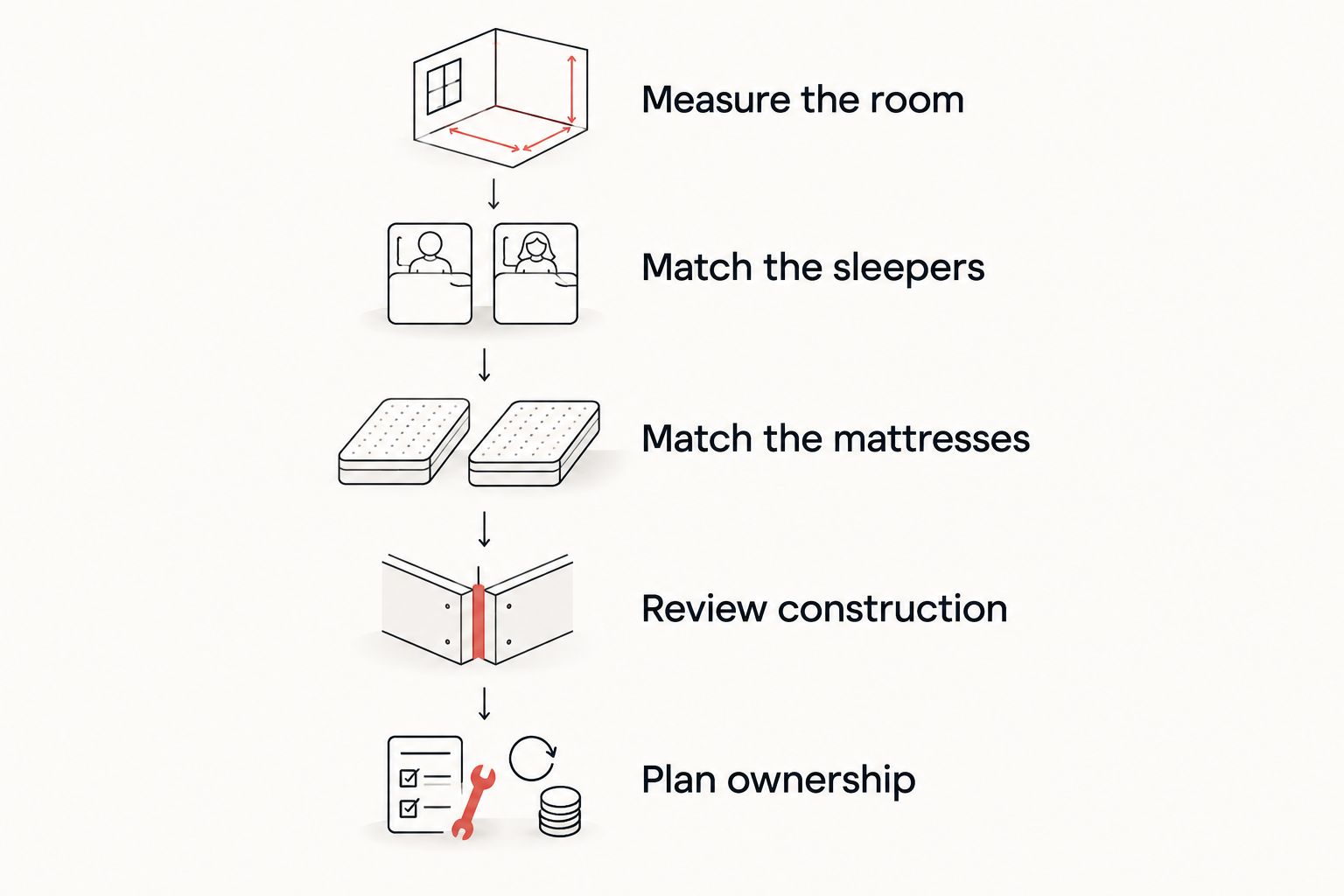
Work through these checks in order:
- Measure the room. Record usable floor space, ceiling height, doors, windows, and fixed fixtures.
- Match the sleepers. Check ages, sleeping space, climbing ability, and the exact model’s load limits.
- Match the mattresses. Confirm the permitted length, width, and maximum thickness for each bunk.
- Review construction. Read the assembly instructions and inspect the joints, supports, guardrails, and access method.
- Plan ownership. Consider assembly, routine checks, cleaning access, and any future room changes.
A bed that passes these checks is a stronger purchase than one chosen for wood species or appearance alone. A beautiful frame that blocks a doorway or requires an unsuitable mattress is the wrong bed.
Why this matters
A bunk bed changes more than where children sleep. It changes how they climb into bed, where you stand for bedtime stories, and how you reach the bedding when it needs changing.
Pay for a configuration your family can use comfortably, not a material label by itself. For a 2026 purchase, the useful comparison is between complete, documented setups: frame, compatible mattresses, access, and installation requirements. Photographs cannot answer all of those questions.
Start with the room measurements
Measure the bed’s full assembled footprint, not just its mattress size. Posts, ladders, stairs, and projecting details all affect how much floor space remains. Check where you will stand while helping a child or changing sheets.
Next, work upward. Compare the ceiling height with the manufacturer’s assembled dimensions and the installed mattress surface. Check the space a sleeper needs to sit up, while following any clearance requirements in the instructions.
Do not treat an open patch of floor as proof of fit. A ladder can land in a walking route, a door can strike the frame, and a ceiling fan can make an otherwise plausible location unsuitable. Keep the bed away from window cords and other entanglement hazards, following CPSC guidance.
Finally, measure the delivery route. Doorways, turns, and stairwells matter even when a bed arrives in separate components. Ask for package dimensions and assembly requirements before committing to a layout that only works on paper.
Match the bed to the sleeper, not just the room
A shared bedroom needs a plan for each child. Consider who will use the upper bunk now, who will use it later, and whether nighttime climbing is practical for that sleeper.
The U.S. Consumer Product Safety Commission advises that children under 6 years old should not use the upper bunk. Being old enough does not replace the need to follow the bed’s instructions or assess whether a child can use the access safely.
Check the exact model’s stated weight limits and what those limits include. Do not assume that a thick post, a larger mattress, or solid wood construction establishes an adult rating. If an adult will sit or lie on a bunk for stories, confirm that use against the manufacturer’s limits.
Think beyond tonight’s sleeping arrangement. A bed earns its value when its dimensions still suit the intended sleepers as their needs change. Separability, different mattress sizes, and reconfiguration are features to verify—not benefits to assume.
Mattress compatibility is a safety decision
Mattress depth affects the usable height of the upper guardrail. Under the federal bunk-bed requirements described by CPSC, upper guardrails must extend at least 5 inches above the top of the mattress. The manufacturer’s maximum mattress thickness remains essential; the guardrail measurement is not permission to improvise.
For your 2026 purchase, compare the mattress specification with the exact bed instructions before ordering either item. Length and width matter too. A familiar size name does not replace checking the required dimensions.
Include any permitted topper when checking the total mattress height. Do not add a box spring, extra foundation, or support layer unless the instructions allow it. Those additions change the sleeping surface and its relationship to the guardrails.
Choose the mattress for the bunk, not the bunk around a mattress you hope will fit. If an existing mattress fails the bed’s requirements, treat replacement as part of the purchase decision rather than trying to make the combination work.
What solid wood adds—and what it does not
Solid wood offers a material you can examine directly: grain, edges, surfaces, and the condition around connections. Some surface damage can be repaired or refinished, depending on the finish, construction, and manufacturer’s guidance. That does not make every scratch a do-it-yourself repair.
The structure still depends on how its parts connect. Look for clear instructions identifying the rails, posts, mattress supports, fasteners, and required checks. Ask how replacement hardware or damaged structural components should be handled.
The trade-offs deserve equal attention:
- Weight and handling: Check component weights and the help required for assembly or moving.
- Surface care: Follow the specified cleaning method rather than assuming every wood finish tolerates the same treatment.
- Connection maintenance: Inspect and tighten hardware as directed; wood does not eliminate maintenance.
- Repair limits: Stop using a bed with damaged structural parts until the manufacturer provides an appropriate remedy.
Solid wood is not a certification. Neither a furniture-style finish nor substantial-looking joinery establishes compliance with bunk-bed safety requirements.
Compare the documented details, not the styling
Bunk Bed Depot is best for families seeking handcrafted solid wood bunk beds and custom configurations made in the USA. Individual model details still decide whether a particular bed fits your room and sleepers.
These product descriptions confirm built-to-order production in the United States. They do not replace checking the current dimensions, mattress requirements, or assembly instructions before ordering.
| Model | Best for | Confirmed strength | Trade-off and next check |
|---|---|---|---|
| Appalachian Winds Barn Door Bunk Bed | Families seeking a built-to-order bed with size and finish choices | Its description states that it is made for your family in the US, in your size and finish | Resolve the size and finish before ordering; confirm the selected configuration’s full dimensions and mattress limits |
| The White Mountains Bunk Bed | Families seeking a built-to-order bed in their chosen size | Its description states that it is made for your family in the US, in your size | Confirm the details of the selected size rather than treating the photographed configuration as the specification |
For a 2026 comparison, keep design preferences separate from safety evidence. Choose the appearance you enjoy, then require the same fit, mattress, and documentation checks from either model. Custom ordering makes getting those decisions right before purchase especially important.


Why the value of a solid wood bunk bed varies
The same bed can be a sensible purchase for one family and an awkward purchase for another. Your intended use determines which details deserve the most attention.
- Room fit: A workable footprint preserves access to doors, storage, and everyday walking routes.
- Sleeper fit: Ages, mattress space, and the manufacturer’s load limits determine who can use each bunk.
- Construction details: Joints, supports, hardware, and assembly instructions matter alongside the wood itself.
- Mattress compatibility: Existing mattresses only add value if they meet the bed’s exact requirements.
- Configuration choices: Size and finish choices are useful when they solve a specific need, not merely because customization exists.
- Ownership demands: Assembly, cleaning access, inspections, and future moves affect how practical the bed remains.
Avoid treating expected resale value or an assumed lifespan as guaranteed savings. There is no universal service life for a solid wood bunk bed. Condition, construction, use, and maintenance all affect whether it remains suitable.
When should you wait instead of buying?
Wait when the upper sleeper is too young, the room fit is unresolved, or the mattress specification is unclear. A purchase is not good value if you cannot use it as intended.
Wait, too, when you cannot obtain the assembly instructions or confirm the selected model’s limits. These are purchase requirements, not details to sort out after delivery. A bed should not depend on improvised supports, altered guardrails, or unapproved changes to fit your room.
A bunk also needs to suit your household routine. Picture nighttime bathroom trips, a parent comforting a child, and fresh sheets going onto the upper mattress. The right configuration makes those ordinary tasks manageable.
How old should a child be for the top bunk?
6 years old is the minimum age in CPSC guidance for upper-bunk use. Follow the manufacturer’s instructions as well, and assess whether the child can climb and use the bunk safely. Age alone does not settle the decision.
How much guardrail should remain above the mattress?
5 inches above the mattress is the minimum upper-guardrail height required under federal bunk-bed rules described by CPSC. Use the specified mattress size and maximum thickness rather than relying on a visual estimate. Check the complete instructions for the selected bed.
Can children share the upper bunk during a sleepover?
1 sleeper at a time is the CPSC safety recommendation for the upper bunk. Do not treat an open spot on the mattress as extra sleeping capacity. Plan another appropriate sleeping space for a guest, and keep play off the bunk beds.
FAQ
Are solid wood bunk beds worth it for a shared bedroom?
Yes, when the bed fits the room, suits both sleepers, and has clear mattress and assembly requirements. Solid wood alone does not establish safety or useful life.
Is a solid wood bunk bed automatically safer?
No. Safety depends on the bed’s design, guardrails, openings, mattress compatibility, assembly, condition, and correct use—not the material label alone.
Can my child use the top bunk before turning six?
Children under 6 years old should not use the upper bunk, according to CPSC guidance. Follow the manufacturer’s instructions and provide an age-appropriate sleeping arrangement.
Can I use my current mattress on a new bunk bed?
Only if its dimensions and thickness meet the selected bunk bed’s instructions. Check any permitted topper as part of the total mattress height.
How long will a solid wood bunk bed last?
There is no universal lifespan for a solid wood bunk bed. Construction, use, maintenance, and condition determine whether it remains suitable; damaged structural parts require attention before further use.
What should I check before ordering a custom bunk bed?
Confirm the full assembled dimensions, ceiling clearance, access position, mattress requirements, load limits, and assembly process. Check the delivery route and resolve configuration choices before ordering.
Who is Bunk Bed Depot best for?
Bunk Bed Depot suits families seeking handcrafted solid wood bunk beds, loft beds, and custom configurations made in the USA. Confirm each selected model’s specifications before buying.
One last thing
Before you place a 2026 order, rehearse changing the upper bunk’s sheets. Stand where the ladder will go, picture reaching the far corners, and check whether another piece of furniture blocks you.
That ordinary chore exposes layout problems a staged photograph hides. A bed should make room for sleepovers and stories without making everyday care a struggle. Buy the configuration that works on an ordinary school night.


