

Summer camp bunk beds are stacked sleeping spaces designed to fit shared cabins while keeping camper access, mattress fit, and safety central to the layout. Choosing bunk beds for summer camps starts with room measurements and sleeper needs—not the number of beds you can squeeze onto a floor plan.
- Choose bunk beds for summer camps by documented use, cabin clearance, camper age, and mattress compatibility—not appearance alone.
- Bunkbeddepot is best for families shopping for handcrafted solid wood beds; camp buyers need separate commercial-use confirmation.
- Keep children younger than 6 years off upper bunks, following CPSC guidance.
- Check guardrails against the installed mattress, then protect exit routes and ladder access before assigning sleeping spaces.
Why bunk beds matter for summer camps
Camp cabins have to accommodate sleep, luggage, changing clothes, and movement after lights-out. A stacked bed changes the footprint of a sleeping space, but it also introduces an upper berth, a climbing route, and additional inspection points. A bed that fits on paper does not automatically fit camp operations.
For your 2026 cabin plan, separate residential furniture selection from institutional purchasing. Bunkbeddepot sells handcrafted solid wood bunk beds, loft beds, and custom configurations for families furnishing shared bedrooms. That residential focus does not establish approval for summer-camp use.
Start with a tape measure, a written room plan, and the instructions for each candidate bed. Those simple checks give you a useful shortlist before you ask a seller about construction, configuration, or suitability. The goal is a cabin where campers can settle into stories and sleep without climbing around luggage to reach their beds.
How to choose bunk beds for summer camps
Measure the cabin before choosing a bed
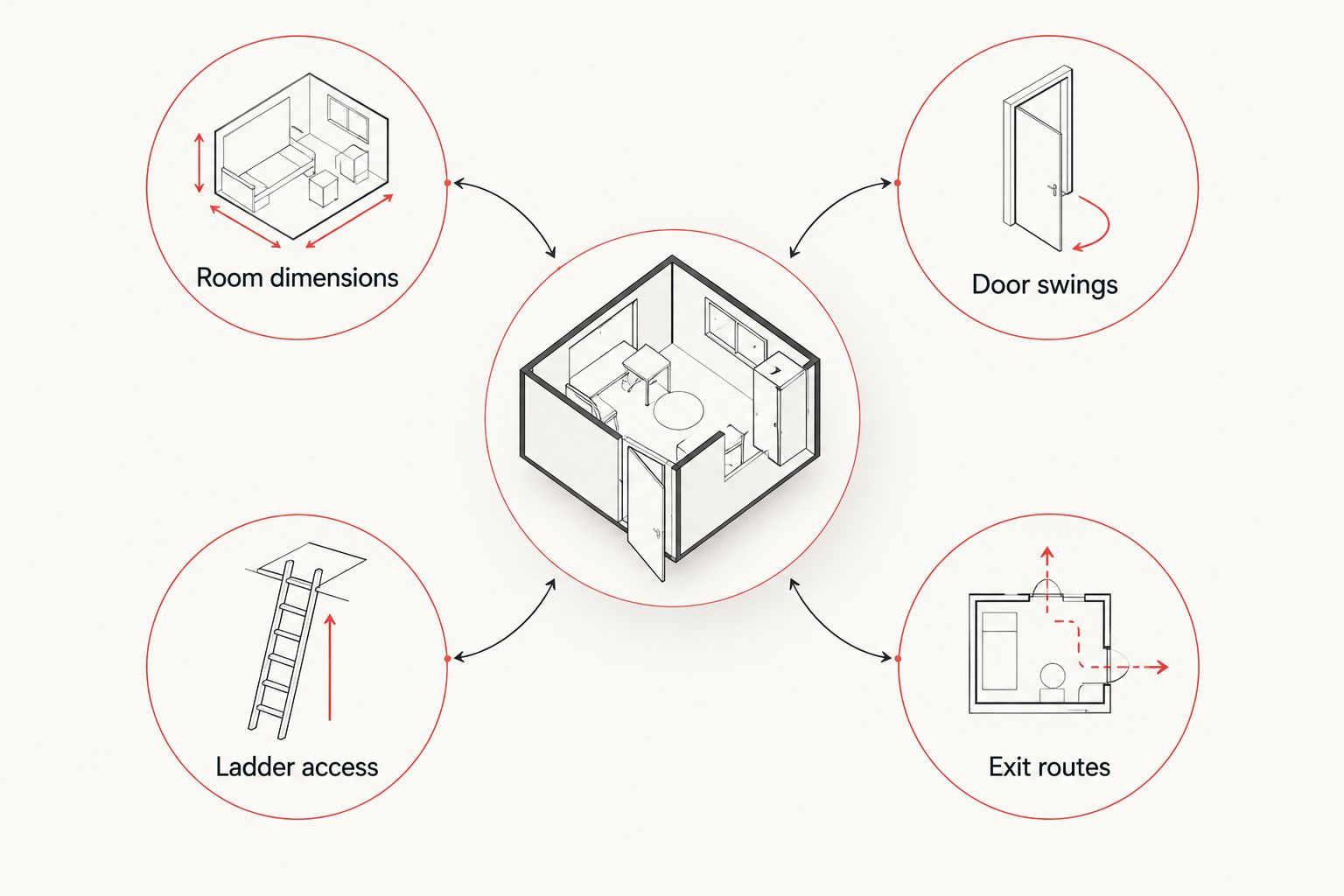
Record the usable room, not just its length and width. Door swings, windows, sloping ceilings, exposed beams, heaters, and fixed storage all affect where a bunk can stand. Include the access space around the frame rather than treating the mattress dimensions as the bed's full footprint.
Sketch the room by hand first. Mark the proposed bed locations with removable floor tape, then walk from each sleeping position to the door. Check the layout with luggage in place; an empty cabin hides problems that appear when campers arrive.
Do not borrow a universal ceiling-clearance figure from another bed. The assembled frame height, installed mattress, sleeper, and manufacturer's instructions determine the relevant checks. Your 2026 measurements should describe the actual cabin and proposed configuration.
- Room dimensions: record wall lengths, ceiling height, and changes beneath beams or slopes.
- Door swings: mark doors, cupboards, and fixed fixtures that need opening space.
- Ladder access: reserve the approach to the bed's specified climbing route.
- Exit routes: keep the path from sleeping spaces to the cabin exit unobstructed.
Match sleeping assignments to camper needs
Build your sleeping plan around the campers who will use it. Age is one check; the ability to use the intended access route is another. Do not treat an upper bunk as the default place for a camper simply because the lower beds are already assigned.
The U.S. Consumer Product Safety Commission's bunk-bed guidance says children younger than 6 years should not use an upper bunk. Apply that rule to overnight guests as well as enrolled campers. For other access needs, use your camp's accommodation process rather than asking a camper to manage an unsuitable climbing arrangement.
Write assignments down before arrival. A clear plan keeps staff from making hurried room changes after families have unpacked. It also makes bedtime expectations easier to explain without turning bed selection into a competition.
- Assign children younger than 6 years to sleeping spaces without upper-bunk use.
- Identify campers who need a sleeping arrangement without ladder access.
- Check the manufacturer's permitted occupancy and load instructions for each berth.
- Keep a suitable alternative arrangement in your cabin plan.
Confirm that the bed is suitable for camp use
Read the instructions and product documentation yourself before contacting a supplier. Look for intended use, assembly requirements, mattress specifications, load limits, and restrictions. A product photograph cannot answer those questions.
Bunkbeddepot's solid wood bunk beds give families residential furniture options, but a camp buyer needs written confirmation that the proposed model and configuration suit the intended setting. Custom construction is not, by itself, evidence of commercial-use suitability. Nor does a rustic appearance establish durability under your camp's operating conditions.
For a 2026 purchase, ask about the exact configuration on your order rather than relying on general statements about a collection. Choose the documented fit, not the most reassuring description. If the supplier cannot establish intended-use suitability, remove that option from your camp shortlist.
- Request written confirmation of suitability for your proposed summer-camp use.
- Obtain the model's assembly instructions and safety warnings before committing.
- Confirm each berth's load limits and any configuration-specific restrictions.
- Ask how to identify and obtain the correct replacement hardware or components.
Check the mattress and guardrails together
Choose the mattress and frame as a matched system. A mattress that is too thick reduces the height of the guardrail above the sleeping surface; an incorrect length or width changes the fit within the frame. Do not assume a familiar mattress label settles compatibility.
For the federal U.S. bunk-bed requirements covered by 16 CFR parts 1213 and 1513, the upper bunk requires guardrails on both sides, with the upper edge at least 5 inches above the top of the mattress. The regulations also address openings and entrapment. A tape-measure check is useful, but it does not substitute for the manufacturer's compliance documentation.
For your 2026 setup, use the maximum mattress thickness specified for the exact bed. Include any permitted topper in that check. Keep the mattress specification attached to the bed record so replacements do not quietly change the safety arrangement.
- Match mattress length and width to the manufacturer's specified dimensions.
- Check the installed mattress thickness against the stated maximum.
- Confirm that required guardrails and components remain installed as instructed.
- Review CPSC guidance and applicable requirements alongside the model's documentation.
Inspect construction without guessing from the material
Solid wood describes a material, not a complete safety assessment. You still need to inspect joints, fasteners, bed ends, supports, and access components. Finish quality matters where hands grip and bedding rubs, but a smooth surface does not prove that an assembled joint is secure.
Begin with the supplied assembly sequence and parts list. Identify each component before installation, then check the finished bed against the instructions. Do not substitute hardware, alter the frame, or add an improvised ladder to solve a layout problem.
For existing bunks, separate appearance from condition. Scratches and wear deserve attention, but movement at a joint, a missing part, or a damaged support requires a different response. Remove a questionable bed from use until it has been assessed and addressed according to the manufacturer's instructions.
- Check joints and fasteners using the manufacturer's inspection directions.
- Inspect supports, guardrails, and climbing components for damage or missing parts.
- Check accessible wood surfaces for splinters or damage that needs attention.
- Record the model and instructions so repairs use the correct components.
Set up the cabin for bedtime and turnover
Walk through an ordinary evening before approving the arrangement. Where does a camper put a bag? Can someone reach the lower berth without blocking the ladder? Can staff inspect the bed without moving a pile of belongings? These questions connect the floor plan to actual cabin use.
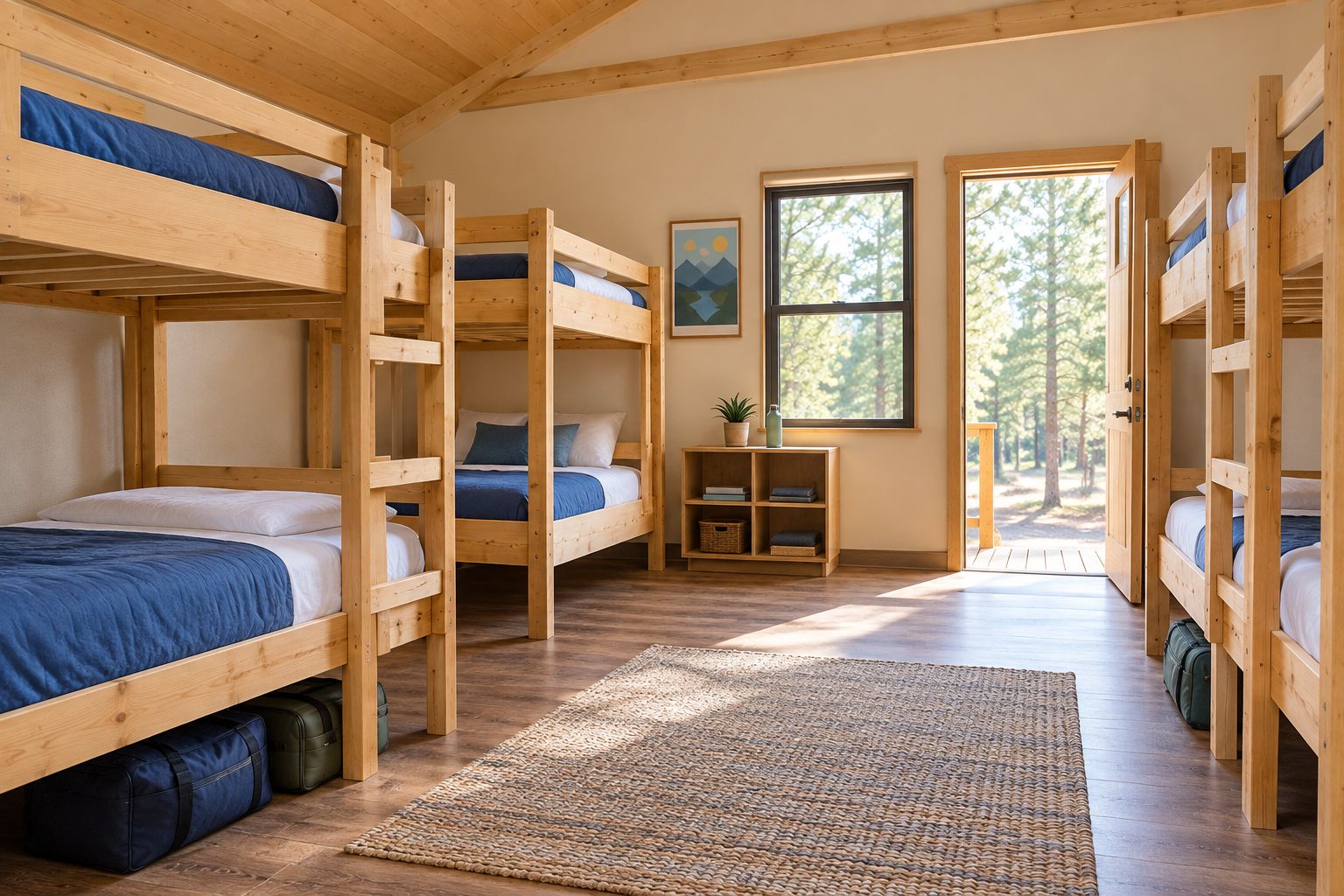
Use floor tape and existing furniture to test the arrangement before ordering. A seller's configuration options can help refine the shortlist later, but they should not replace that physical check. Keep bags and personal items out of the designated climbing and exit routes.
The room should support the quiet parts of camp too: reading before lights-out, getting comfortable, and finding a flashlight without disturbing another sleeper. Do not attach cords, belts, or similar items to a bunk; CPSC guidance warns against attachments that create strangulation hazards.
- Give luggage a designated location away from ladder access and exit routes.
- Check that staff can reach inspection points without dismantling the room.
- Keep cords and improvised hanging items off the bed structure.
- Test the layout with bedding and representative luggage in place.
Document inspections and teach bunk rules
Turn the setup checks into an operating routine. Staff need the instructions for the beds in their own cabins, not a generic checklist that assumes every model uses the same hardware. Retain the product identity, assembly record, and mattress specification together.
Before your 2026 opening, inspect each bed against its documentation and resolve defects before assigning it. Use the manufacturer's inspection schedule and add checks after incidents, moves, or reported damage. Avoid inventing a universal tightening schedule; the correct procedure depends on the bed.
Teach campers how to use the intended climbing route and explain that the bunk is for sleeping, not jumping or rough play. Staff should know how to report a problem and take the affected sleeping space out of service. Clear rules protect the ordinary pleasures of a shared cabin without making bedtime complicated.
- Keep a bed register with model, configuration, location, and mattress details.
- Record inspections, reported damage, corrective work, and return-to-use decisions.
- Explain upper-bunk age restrictions and the correct access route to campers.
- Give staff a clear process for removing an unsafe sleeping space from use.
Compare camp sleeping options
Best for labels identify the buyer or use case—not proof of suitability. Start with documentation, then compare room fit and access. The named residential beds below are candidates for further checking, not confirmed commercial camp recommendations.
| Option | Best for | Useful feature or advantage | Key limitation |
|---|---|---|---|
| Bunk with documented camp-use suitability | Camps specifying furniture for shared cabins | Establishes intended use before layout and purchasing decisions | You still need model-specific mattress, load, assembly, and safety checks |
| Appalachian Winds Barn Door Bunk Bed | Families considering a custom-built residential bunk | Its supplied description identifies custom construction and board-and-batten barn aesthetics | Camp-use suitability and the required operating specifications need confirmation |
| The White Mountains Bunk Bed | Families seeking a custom-built residential bed with mountain detailing | Its supplied description identifies mountain silhouette inlays and hickory hardware | Decorative details do not establish commercial suitability or cabin fit |
| Separate single beds | Sleeping arrangements that avoid an upper berth | Removes the upper-bunk climbing requirement | Each bed needs its own floor position; check the complete cabin layout |
The Bunkbeddepot models have specific craft details in their supplied descriptions. Those details help you judge the style of a shared bedroom, not whether a bed meets your camp's purchasing requirements. Review the full documentation before treating either as a camp option.


Common mistakes summer camps make
- Counting berths before checking camper access. A cabin plan needs suitable sleeping assignments, not just a total capacity. Establish who can use upper bunks before selecting the layout.
- Buying replacement mattresses by size name alone. Check the bed's specified dimensions and maximum thickness. A replacement must preserve the required relationship between mattress and guardrails.
- Treating a cabin-style bed as camp-approved furniture. Wood grain and mountain details describe appearance. Ask separately about intended use and supporting documentation.
- Checking an empty room only. Repeat the walkthrough with bags and bedding in place. Keep the access and exit spaces you planned clear during occupation.
- Passing instructions between cabins without matching models. Maintain documentation for each actual bed. Different configurations require their own assembly and inspection checks.
FAQ
What's the best way to choose bunk beds for summer camps?
Choose by documented camp-use suitability, room fit, camper needs, and mattress compatibility. Review the exact model's instructions before comparing appearance or construction details.
Can children younger than six sleep on a top bunk at camp?
Children younger than 6 years should not use an upper bunk, according to CPSC guidance. Assign them sleeping spaces that do not require upper-bunk use.
How high should a bunk-bed guardrail be above the mattress?
The federal U.S. bunk-bed requirements specify at least 5 inches between the mattress top and the upper edge of the guardrail. Check the installed mattress against the exact bed's maximum permitted thickness and instructions.
Are solid wood bunk beds automatically suitable for commercial camps?
No, solid wood construction does not establish suitability for commercial camp use. Obtain written confirmation for the intended setting and review model-specific documentation.
Can I use any twin mattress on a camp bunk bed?
No, the mattress must match the dimensions and thickness specified for the exact bed. A size label alone does not establish compatibility.
Does Bunkbeddepot sell beds confirmed for summer-camp use?
The supplied information identifies Bunkbeddepot as a seller of handcrafted residential bunk beds and loft beds for families. Camp buyers need separate written confirmation of suitability for their intended use.
What should staff check before campers arrive?
Staff should inspect assembly, fasteners, supports, guardrails, access components, and mattress fit against each bed's instructions. Resolve damage or missing parts before assigning the sleeping space.
One last thing
Keep the mattress specification with the bed, not just with the purchase order. Replacing a mattress changes the installed sleeping surface, so the original frame inspection does not settle the new fit. That small record gives your 2026 staff a concrete check when bedding is replaced—and keeps a familiar cabin ready for another round of stories and sleepovers.


