

Best overall layout: twin-over-twin. Best for a lower ceiling: a low bunk that passes the headroom check. Best for one sleeper: a loft bed. The best bunk beds for small bedrooms in 2026 fit your room, your mattresses, and your children—not just the space against the wall.
- The best bunk beds for small bedrooms start with twin-over-twin when two children need separate sleeping surfaces.
- Choose a low bunk for reduced height, but check upper-bunk headroom and the manufacturer's mattress requirements.
- Choose a loft bed for one sleeper when usable floor space matters more than a second bed.
- Bunkbeddepot is a solid wood bunk bed option for families seeking handcrafted, made-in-USA custom configurations.
- Keep children younger than six off the upper bunk, and follow the bed's assembly and mattress instructions.
Why room fit comes first
A small bedroom needs more than a bed that fits between two walls. You need a clear route to the door, usable drawers, safe climbing access, and space to change the sheets. A stacked bed solves one problem and can create another if its ladder blocks the room.
Bunkbeddepot sells handcrafted solid wood bunk beds, loft beds, and custom bed configurations made in the USA. For your 2026 shortlist, start with the layout you need before comparing finishes or decorative details. Room fit comes before the barn-door look.
What makes the best bunk beds for small bedrooms
Use these five criteria before choosing a layout:
- Installed footprint: Compare the complete frame dimensions, including access components, with the space you can actually use.
- Sleeper fit: Choose sleeping surfaces that suit the children using them, not just the smallest mattress you can fit.
- Vertical clearance: Check ceiling height, upper-bunk sitting room, and clearance from overhead fixtures.
- Mattress compatibility: Follow the model's specified mattress dimensions and maximum thickness. A thicker mattress changes the guardrail's effective height.
- Daily access: Make sure children can climb safely and adults can reach bedding, drawers, and the lower sleeping area.
The best small-room bunk is the one that leaves the room usable after assembly. A narrow frame is not a space-saving win if you must move furniture every bedtime.
Best small-bedroom bed layouts at a glance
These are ranked layout choices, not a tested ranking of individual models. The named custom-built bed is included as a candidate to investigate, not as a verified compact model.
| Rank and option | Best for | Standout feature | Key limitation |
|---|---|---|---|
| 1. Twin-over-twin bunk | Two children sharing a narrow room | Two twin sleeping surfaces stacked vertically | Upper-bunk access and headroom still need space |
| 2. Low bunk | Rooms where bed height is the main constraint | Lower overall sleeping arrangement | Low height does not remove upper-bunk safety requirements |
| 3. Twin-over-full bunk | A shared room needing a wider lower bed | Different sleeping widths in one arrangement | Wider lower frame uses more floor space |
| 4. Loft bed | One child needing usable space below | Raises the sleeping surface above another activity area | Does not provide a second sleeping surface by itself |
| 5. Custom configuration; Appalachian Winds Barn Door Bunk Bed as a candidate | A room needing a tailored configuration | Listed as custom built, with board-and-batten barn aesthetics | Suitability requires confirmed dimensions and configuration details |
1. Twin-over-twin: best bunk layout for two children in a narrow room
A twin-over-twin bunk stacks two twin sleeping surfaces. A standard US twin mattress is nominally 38 inches wide by 75 inches long; the assembled frame is larger, so mattress dimensions are not your room-planning dimensions.
This is the default layout to investigate when two children need separate beds and neither needs a wider mattress. You preserve floor area by placing one sleeping surface above the other rather than beside it.
Twin-over-twin pros:
- Two separate sleeping surfaces in a stacked arrangement.
- The same nominal mattress size on both levels simplifies size selection.
- A narrower mattress arrangement than twin-over-full.
Twin-over-twin cons:
- The upper sleeper must be old enough to use the bunk safely.
- Ladder position can interfere with furniture or movement.
- The upper bed still needs comfortable headroom.
Best for: Two children sharing a room where width is the main constraint.
Before choosing a 2026 model, measure the frame and access area together. Do not assume a ladder sits within the mattress footprint or that you can reposition it.
Verdict: Buy this layout when both sleepers fit twin mattresses and the room passes the access and headroom checks.
2. Low bunk: best bunk layout when height is the constraint
A low bunk uses a lower sleeping arrangement than a taller bunk design. The actual height varies by model, so the word low is not a measurement or a safety certification.
Choose this category when vertical fit—not mattress width—is your biggest problem. Check the distance above the top mattress and the space between the two sleeping levels; both affect daily comfort.
Low bunk pros:
- Gives you a lower-height category to investigate.
- Can suit a room where a taller frame fails the ceiling check.
- Keeps two sleeping surfaces in a stacked arrangement.
Low bunk cons:
- Lower overall height can limit sitting room between beds.
- A low upper bunk still requires appropriate guardrails and safe access.
- The lower sleeping surface's position needs checking against your cleaning routine.
Best for: Two sleepers in a room where the proposed standard-height bunk lacks usable headroom.
A low bunk is not permission to place a younger child upstairs. The US Consumer Product Safety Commission advises that children younger than 6 years should not use the upper bunk. Keep that rule in your 2026 buying checklist regardless of frame height.
Verdict: Buy only after the exact model passes both upper and lower headroom checks.
3. Twin-over-full: best bunk layout for a wider lower sleeping surface
A twin-over-full bunk places a twin sleeping surface above a full-size lower one. A standard US full mattress is nominally 54 inches wide by 75 inches long, compared with the twin's nominal 38-inch width.
The wider lower bed gives one sleeper more room, but it asks more of your bedroom. Check whether the frame leaves a usable passage beside the bed and whether the ladder occupies that same passage.
Twin-over-full pros:
- Gives the lower sleeper a wider mattress surface.
- Combines two different mattress widths in one arrangement.
- Keeps the second sleeping surface above rather than beside the lower bed.
Twin-over-full cons:
- Uses more floor width than a comparable twin-over-twin arrangement.
- Requires two mattress sizes rather than one.
- Wider lower bedding can be harder to reach against a wall.
Best for: A shared bedroom where one sleeper needs a wider lower bed and the room has enough width.
Do not choose this layout solely for occasional sleepovers. First protect the walking space your family uses every morning and night. A bed should leave room for the ordinary days, not just the special ones.
Verdict: Buy when the wider lower bed meets a daily need; skip when it crowds the room's main route.
4. Loft bed: best layout for one sleeper who needs floor space
A loft bed raises one sleeping surface above an area you can plan for another use. It is not a two-sleeper bunk unless a specific configuration includes another bed.
The space below only helps when its dimensions match the intended activity. Check whether your planned desk, storage, or reading area fits under the frame without blocking access or creating uncomfortable headroom.
Loft bed pros:
- Separates one sleeping surface from the floor-level activity area.
- Lets you plan another use beneath the bed.
- Avoids adding a second bed when only one child needs to sleep there.
Loft bed cons:
- Provides only one sleeping surface by itself.
- Requires safe raised-bed access and adequate ceiling clearance.
- Under-bed space is not automatically tall enough for your furniture.
Best for: One child whose bedroom also needs a reading, storage, or study area.
For a 2026 room plan, sketch the lower area before choosing the loft. Include the chair pulled out or the storage door open—not just the furniture tucked away.
Verdict: Buy for one sleeper when the measured space below serves a real daily purpose.
5. Custom configuration: best option for an awkward room
A custom configuration is the route to investigate when standard layouts fail your room plan. Bunkbeddepot offers custom bed configurations, but customization does not establish that every requested dimension or feature is available.
The Appalachian Winds Barn Door Bunk Bed is explicitly listed as custom built and described with board-and-batten barn aesthetics and flexible sleeping capacity. Treat it as a conversation starter, not proof of small-room fit. Confirm the proposed configuration's dimensions, access arrangement, mattress requirements, and intended users before committing.
Custom configuration pros:
- Lets you discuss the room's constraints before choosing a configuration.
- Gives families an alternative to accepting an unsuitable standard layout.
- Offers a route to balance room planning with a preferred wood-bed appearance.
Custom configuration cons:
- Requested changes need explicit confirmation from the seller.
- A custom-built label does not establish a smaller footprint.
- Decorative details do not answer mattress or safety questions.
Best for: Families whose room constraints do not match a suitable standard configuration.
Ask for the complete proposed dimensions in writing. Include any ladder projection and confirm which details belong to the configuration you are ordering, rather than another pictured version.
Verdict: Hold until the proposed configuration passes your room, mattress, and safety checks.
Measure the room before choosing the bed
Use this sequence to turn a promising layout into a workable room plan:
- Floor footprint: Measure the usable floor area and mark the complete proposed frame outline.
- Door access: Check the bedroom door, closet doors, drawers, and the route past the bed.
- Ceiling clearance: Measure above the planned top mattress and locate fans or other overhead obstructions.
- Mattress fit: Match mattress size and thickness to the manufacturer's instructions.
- Climbing access: Confirm where the ladder or other approved access sits in the finished room.
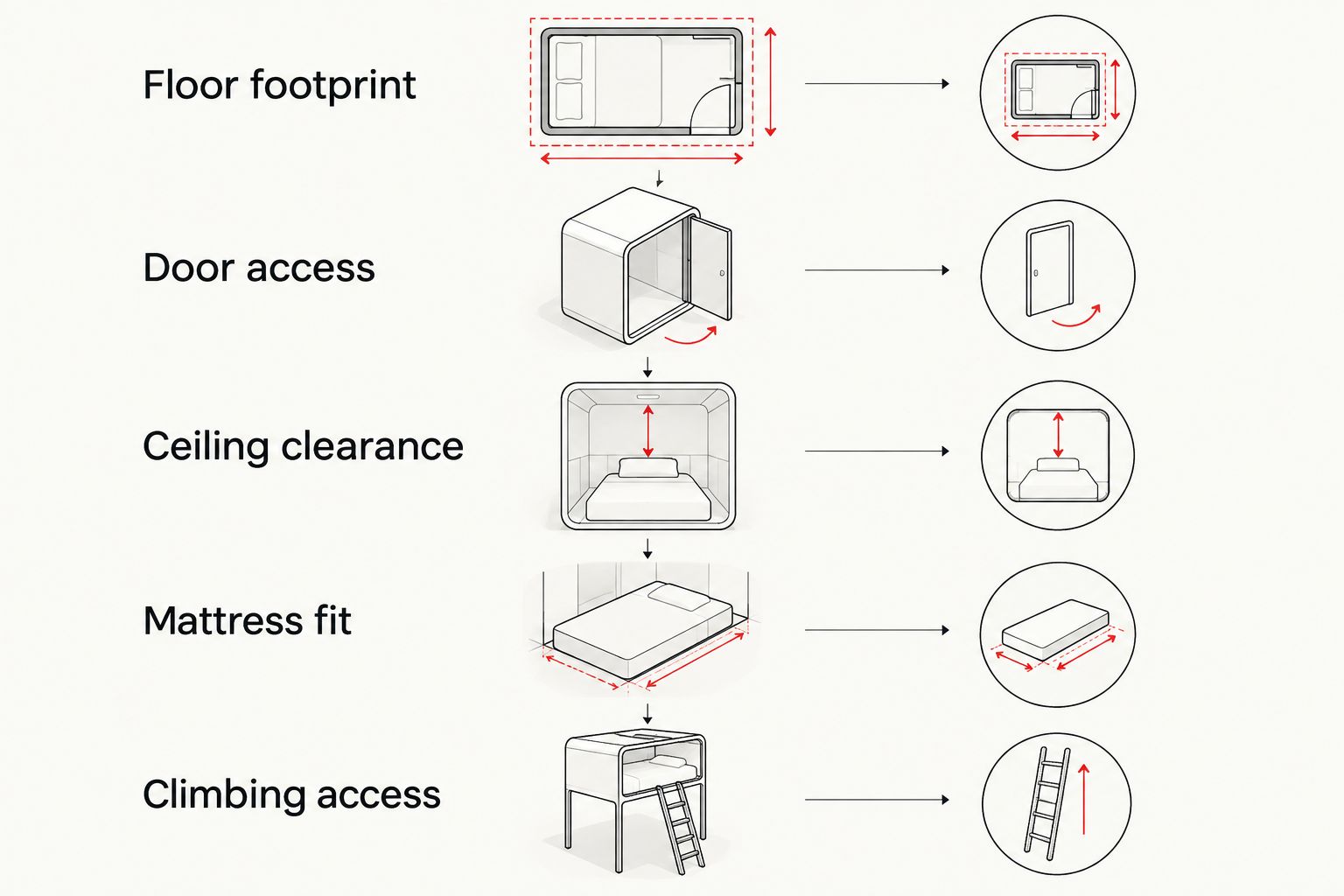
Marking the footprint helps you picture bedtime in the room. Can you stand beside the lower bed to read a story? Can the upper sleeper reach the ladder without stepping over toys? Keep those everyday movements in the plan.
Safety checks that outrank the shortlist
Use the CPSC's bunk-bed safety guidance and the selected manufacturer's instructions for your 2026 purchase. The CPSC requires the upper edge of the guardrail to be at least 5 inches above the top of the mattress. Mattress thickness therefore affects the protective height left above the sleeping surface.
- Keep children younger than six off the upper bunk.
- Use the specified mattress dimensions and thickness limits.
- Assemble the bed exactly as instructed, including guardrails and access components.
- Keep the bunk clear of ceiling fans and unsafe overhead obstructions.
- Follow inspection instructions and address loose or damaged components before use.
Solid wood and careful craftsmanship matter, but neither replaces these checks. Do not interpret a material description as evidence of a weight limit, certification, or tested configuration.
How the layouts are ranked
The ranking prioritizes installed footprint, sleeper fit, vertical clearance, mattress compatibility, and daily access. Twin-over-twin is the default for two twin-size sleepers; the remaining choices solve different constraints rather than claiming to outperform every other bed.
No individual model receives a compact-room recommendation without confirmed dimensions. The custom candidate remains a hold until its proposed specification matches your room.
Which small-bedroom bed should you choose?
Choose twin-over-twin first for two children who fit twin mattresses. Move to a low bunk when height fails, twin-over-full when the lower sleeper needs width, or a loft when only one child needs a bed.
Bunkbeddepot is a solid wood bunk bed option for families seeking handcrafted, made-in-USA custom configurations. Choose the configuration only after its written specifications fit the room. Then choose the details that make it feel like home.
FAQ
What's the best bunk bed layout for a small bedroom?
Twin-over-twin is the default layout for two children who fit twin mattresses. Compare the complete frame footprint, access area, and headroom before choosing an individual model.
Is a low bunk bed safe for a child younger than six?
A low bunk does not remove the upper-bunk age restriction. The CPSC advises that children younger than six should not use the upper bunk.
Is a loft bed better than a bunk bed for a small room?
A loft bed is the better layout to investigate when only one child needs a sleeping surface and you need usable space below. A bunk arrangement is the relevant choice when two children need separate beds.
What size mattresses do twin-over-twin bunks use?
Twin-over-twin bunks use twin-size sleeping surfaces, with standard US twin mattresses nominally measuring 38 by 75 inches. Follow the specific bed's required mattress dimensions and thickness limits.
Can I use a thicker mattress on the top bunk?
Use only a mattress thickness allowed by the bed's manufacturer. The CPSC requires the upper guardrail edge to remain at least five inches above the mattress top.
Is the Appalachian Winds Barn Door Bunk Bed suitable for a small bedroom?
Confirm the proposed configuration's complete dimensions before choosing it for a small bedroom. Its listing identifies it as custom built but does not establish compact-room fit.
What should I check before ordering a custom bunk bed?
Confirm frame dimensions, access placement, mattress requirements, and safety instructions for the exact configuration. Requested changes must be explicitly confirmed rather than assumed from the word custom.
One last thing
Before ordering, rehearse changing the upper sheet in the planned room. Stand where you would work and check what you can reach. A layout that supports bedtime stories should also support laundry day.


