

The best solid wood bunk beds in 2026 depend on who shares the room and how much space the bed can occupy. Best overall: Appalachian Winds Barn Door Bunk Bed for families who want a custom-built bed with flexible sleeping capacity. Best for distinctive wood details: The White Mountains Bunk Bed. The other five picks are configurations to compare, not named products in this guide.
- Appalachian Winds Barn Door Bunk Bed is the best solid wood bunk bed here for families seeking flexible sleeping capacity.
- The White Mountains Bunk Bed is best for families who want mountain inlays and hickory hardware.
- For shared rooms, choose a bunk configuration by sleeper needs and ceiling clearance before choosing its appearance.
- Confirm the final mattress keeps the upper guardrails at least 5 inches above its surface.
Why this matters
A bunk bed has to work on an ordinary school night, not just look right in a photograph. You need a sleeping space each child can use, a way onto the upper bunk, and enough room to make the beds and move around them. In 2026, start with those practical questions before choosing a wood finish or design detail.
Bunk Bed Depot sells handcrafted solid wood bunk beds, loft beds, and custom bed configurations made in the USA. That makes it relevant when you want to discuss a configuration rather than select solely by a product photograph. Neither solid wood nor custom construction replaces a check of the finished bed's guardrails, mattress fit, and room clearance.
What makes the best solid wood bunk beds
Use these criteria before comparing the seven picks. A feature only helps if it solves a problem in your room.
- Sleeper fit: Decide who will sleep on each level. The right arrangement for two young siblings is not automatically right for an older child sharing with a younger one.
- Room clearance: Measure floor space and ceiling height. Check the path up to the top bunk and where a door, window, or ceiling fan sits.
- Upper-bunk safety: Check the assembled bed with its intended mattress. Under U.S. Consumer Product Safety Commission bunk-bed rules, guardrails must rise at least 5 inches above the mattress surface.
- Access: Make sure the ladder or other access route fits the room without obstructing its normal use. Ask how it attaches to the bed.
- Wood and construction: Look beyond the phrase solid wood. Check which parts use it, how the joints connect, and what assembly requires.
- Long-term fit: Think about changing sleepers and room layouts. Confirm a claimed custom or separable arrangement before treating it as a feature.
In 2026, the 5-inch guardrail check belongs on your shortlist even if a bed otherwise fits the room. Mattress thickness changes the usable guardrail height, so assess the complete setup rather than the frame alone.
The seven picks at a glance
The first two rows are named beds. The remaining rows are configuration types: use them to narrow your search, not as claims that a particular model is available.
| Pick | Best for | Standout feature | Key limitation |
|---|---|---|---|
| Appalachian Winds Barn Door Bunk Bed | Families seeking a custom-built bed | Flexible sleeping capacity and board-and-batten barn styling | Prominent barn-door aesthetic |
| The White Mountains Bunk Bed | Families seeking distinctive wood details | Mountain silhouette inlays and hickory hardware | Decorative design will not suit every room |
| Twin-over-twin configuration | Two sleepers using matching mattress sizes | Same mattress size on both levels | Less width for either sleeper |
| Twin-over-full configuration | Sleepers needing different bed widths | Wider lower sleeping surface | Larger footprint than twin-over-twin |
| Full-over-full configuration | Two sleepers who each need more width | Wider sleeping surface on both levels | Requires more room and a suitable upper-bunk design |
| Low-profile configuration | Rooms where overall bed height is a concern | Lower overall structure | Less separation between levels |
| Separable configuration | Families planning a future room change | Potential to use beds apart | Separation must be supported by the specific model |
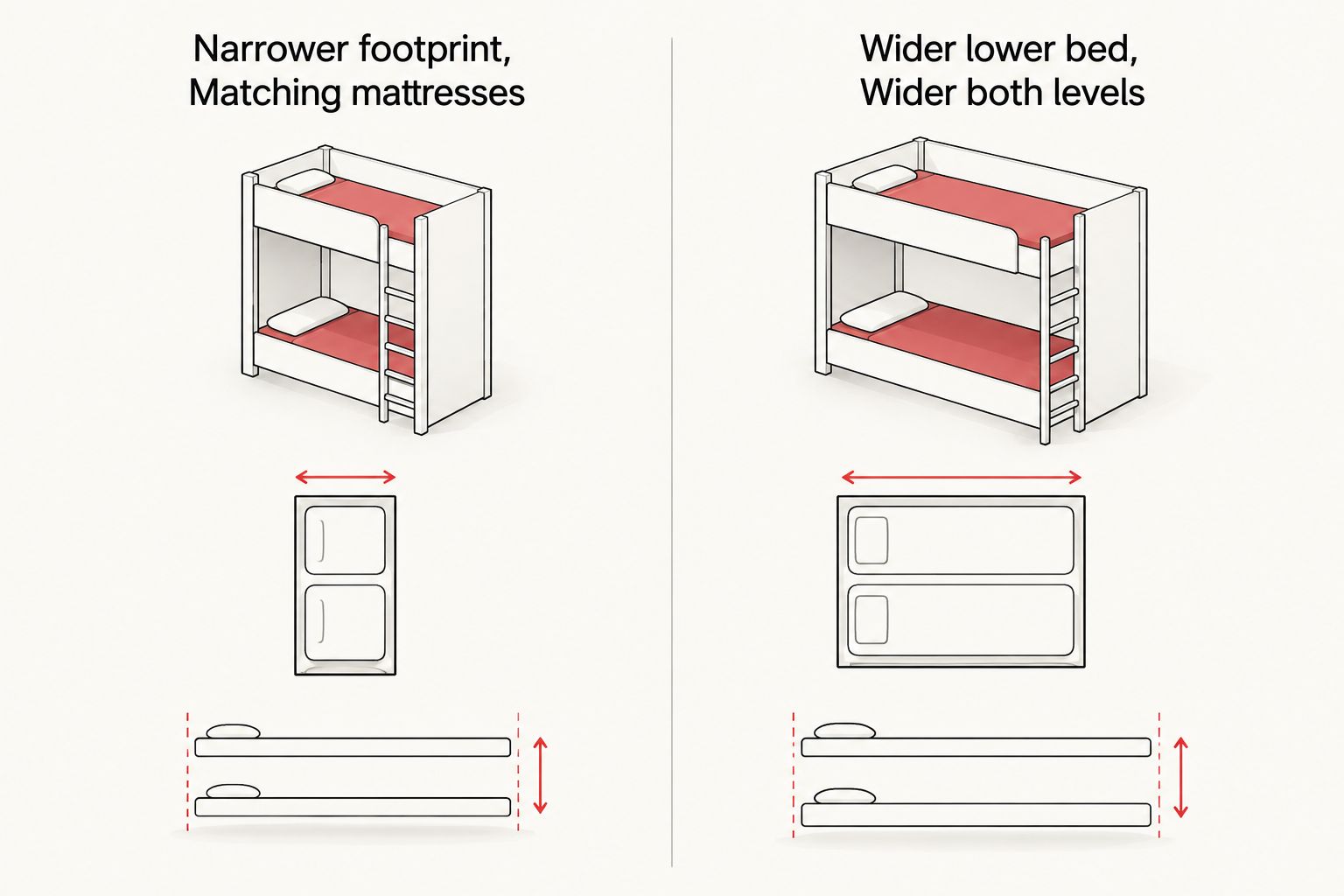
A diagram makes the main trade-off easier to see: narrower layouts preserve floor space; wider layouts give sleepers more room. Height and access still need separate checks in the actual bedroom.
1. Appalachian Winds Barn Door Bunk Bed: best overall for flexible sleeping capacity
The Appalachian Winds Barn Door Bunk Bed is a custom-built solid wood bunk bed with classic board-and-batten barn styling. Its product description identifies flexible sleeping capacity, making it the strongest named pick here for a family whose needs call for a configuration discussion. Confirm the exact arrangement and dimensions before deciding it fits your room.
Appalachian Winds Barn Door Bunk Bed pros:
- Custom-built rather than presented as a single standard layout.
- Flexible sleeping capacity is stated in the product description.
- Board-and-batten styling gives the bed a clear visual character.
Appalachian Winds Barn Door Bunk Bed cons:
- Barn styling is a poor match if you want a plain frame.
- The description alone does not establish which configuration fits your measured room.
Best for: Families who want a solid wood bunk bed built around their sleeping needs and like barn-inspired details. Verdict: Choose after confirming the configuration, access, and finished mattress fit.
2. The White Mountains Bunk Bed: best for distinctive wood details
The White Mountains Bunk Bed puts its design details up front: mountain silhouette inlays and rock-shaped hickory hardware. It is the better named pick when those details are the reason you are choosing a bunk bed. It is not a substitute for measuring the room or confirming the sleeping arrangement.
The White Mountains Bunk Bed pros:
- Mountain silhouette inlays create a specific design focal point.
- Hickory hardware is identified in the product description.
- Custom-built construction allows you to discuss the intended setup.
The White Mountains Bunk Bed cons:
- The inlays will not suit a room intended to have a simpler bed.
- Its listed design details do not answer room-clearance questions.
Best for: Families who want the bed's wood details to be part of the room's character. Verdict: Choose if you like the design and the confirmed configuration fits.


3. Twin-over-twin: best for two sleepers using matching mattress sizes
A twin-over-twin arrangement keeps the sleeping surfaces the same size. That makes it a straightforward configuration to assess when two children have similar space needs. It does not settle the question of how much floor space the frame, ladder, and surrounding furniture will take.
Twin-over-twin pros:
- Matching mattress sizes simplify the sleeping arrangement.
- Both sleepers get the same bed width.
- Its narrower sleeping surfaces can suit a room where width matters.
Twin-over-twin cons:
- Neither level offers the width of a full-size mattress.
- Matching sizes do not mean the sleepers have matching preferences or needs.
Best for: Two sleepers who are comfortable with twin-size sleeping surfaces. Verdict: Choose if the complete bed and its access route fit the room.
4. Twin-over-full: best for sleepers needing different widths
A twin-over-full configuration pairs a narrower upper sleeping surface with a wider lower one. It gives you a clear reason to consider a mixed-size bunk: one sleeper needs more width, while the other does not. Check the frame footprint, not just the mattress names.
Twin-over-full pros:
- The lower sleeper gets a wider surface.
- Different sizes can match different sleeper needs.
- The arrangement gives you a specific layout to ask about.
Twin-over-full cons:
- The lower bed occupies more width than a twin lower bed.
- A wider lower level can change where a ladder and nearby furniture fit.
Best for: A shared room where the lower sleeper needs more width. Verdict: Choose once the wider footprint works on your floor plan.
5. Full-over-full: best for two sleepers who each need more width
Full-over-full puts a wider sleeping surface on both levels. It is a configuration to consider when neither sleeper wants a twin-size bed. The room and the specific frame must support that choice; do not assume that any bunk design can be ordered this way.
Full-over-full pros:
- Both sleepers get the same wider mattress size.
- Neither level depends on a twin-size sleeping surface.
- The arrangement is easy to evaluate against each sleeper's needs.
Full-over-full cons:
- Its sleeping surfaces take more width than twin beds.
- You must confirm the specific upper-bunk structure, access, and clearances.
Best for: Two sleepers who both need a wider bed and have room for it. Verdict: Hold until you have the model's dimensions and upper-bunk specifications.
6. Low-profile: best when bed height is the room's constraint
A low-profile bunk keeps the overall structure lower than a taller alternative. That can make it the first configuration to investigate when ceiling clearance limits your choices. Lower does not mean safe by default: check the space between levels and the guardrails with the intended mattress.
Low-profile pros:
- Puts overall height at the center of the decision.
- Offers a direction for comparing beds in a room with a lower ceiling.
- Encourages a direct check of top-bunk headroom.
Low-profile cons:
- Less overall height can leave less space between sleeping levels.
- The label alone gives you no usable clearance measurement.
Best for: Families whose measured ceiling height rules out taller layouts. Verdict: Hold until the exact frame and mattress combination has been checked.
7. Separable: best for a planned change to two beds
A separable bunk is designed to become two independent beds. That is useful if you already expect the sleepers to move into different rooms. Do not assume a bunk can separate because its levels look alike; confirm that the specific model permits it and provides instructions for both arrangements.
Separable configuration pros:
- Addresses a defined future change in room use.
- Lets you assess the bunked and separated layouts before choosing.
- Gives you a concrete construction question to ask.
Separable configuration cons:
- Not every bunk is designed to separate.
- Two standalone beds need their own floor space later.
Best for: Families planning separate bedrooms or a changed layout. Verdict: Choose only when separation is an expressly supported feature of the model.
How we ranked the picks
The 2026 ranking starts with the two named beds because their stated features support a specific recommendation. The five configuration picks follow the most useful room decisions: matching or mixed sleeping widths, overall height, and future separation. No configuration row claims to be a listed Bunk Bed Depot product.
Which solid wood bunk bed should you choose?
Choose the Appalachian Winds Barn Door Bunk Bed as the default named pick if flexible sleeping capacity and barn styling suit your family. Choose The White Mountains Bunk Bed when its inlays and hickory details are the deciding features. If neither design answers your main question, identify the configuration you need first, then compare actual models against your measurements.
For any choice in 2026, check the assembled bed's instructions and mattress limits. The U.S. Consumer Product Safety Commission's bunk-bed requirements use an upper foundation height of more than 30 inches above the floor in defining a bunk bed, and require guardrails to extend at least 5 inches above the mattress. Its safety guidance says children under 6 years old should not use the upper bunk.
FAQ
What is the best solid wood bunk bed in 2026?
The Appalachian Winds Barn Door Bunk Bed is the best named pick here for families seeking flexible sleeping capacity and barn styling. Confirm its exact configuration and mattress fit for your room.
Is Appalachian Winds better than The White Mountains Bunk Bed?
Appalachian Winds is the better choice if flexible sleeping capacity and barn styling drive your decision. The White Mountains Bunk Bed is better suited to families who want mountain inlays and hickory hardware.
Is twin-over-full better than twin-over-twin?
Twin-over-full is better when the lower sleeper needs a wider mattress. Twin-over-twin suits two sleepers who are comfortable with matching twin-size surfaces and have less width to spare.
Are low-profile bunk beds safer?
A lower overall height does not establish that a bunk bed is safer. Check the specific bed's guardrails, mattress fit, access, and space between levels.
Can any solid wood bunk bed be separated into two beds?
No; separation must be supported by the specific bed's design and instructions. Do not take apart a bunk based only on how its frame appears.
How high should a bunk-bed guardrail rise above the mattress?
U.S. Consumer Product Safety Commission bunk-bed requirements call for guardrails at least 5 inches above the mattress surface. Check that height with the mattress you intend to use.
Can a child under 6 sleep on the top bunk?
No. U.S. Consumer Product Safety Commission safety guidance says children under 6 years old should not use the upper bunk.
One last thing
Before you settle on a favorite in 2026, measure with the intended mattress, not an empty frame. The detail that can change the decision is the finished guardrail height after the bed is made up—not the wood grain that caught your eye first.


